
If your worm bin smells like ammonia, the sharp, cat-litter smell is a warning. It means nitrogen-rich material is breaking down faster than the bin can handle, releasing ammonia gas. Ammonia irritates worms’ skin and can kill them in high concentrations, so it’s worth fixing quickly.
The cause is almost always too much protein, manure or fresh green material and not enough carbon. This guide explains the causes and how to fix the smell in a few days.
Quick answer
- Cause: too much nitrogen (protein, fresh manure, grass clippings, rich feed) and too little carbon.
- Fix: remove the source, add plenty of dry shredded cardboard, aerate and pause feeding.
- Timeline: the smell usually fades in 2–5 days.
- Prevention: balance every feeding with carbon; avoid meat, dairy and fresh manure.
Why a worm bin smells like ammonia
Microbes break down nitrogen-rich material into ammonia. In a balanced bin, other microbes convert it quickly into forms plants can use, and carbon-rich bedding absorbs it. When there’s a surge of nitrogen, ammonia builds up faster than it can be processed and you smell it.

Common causes
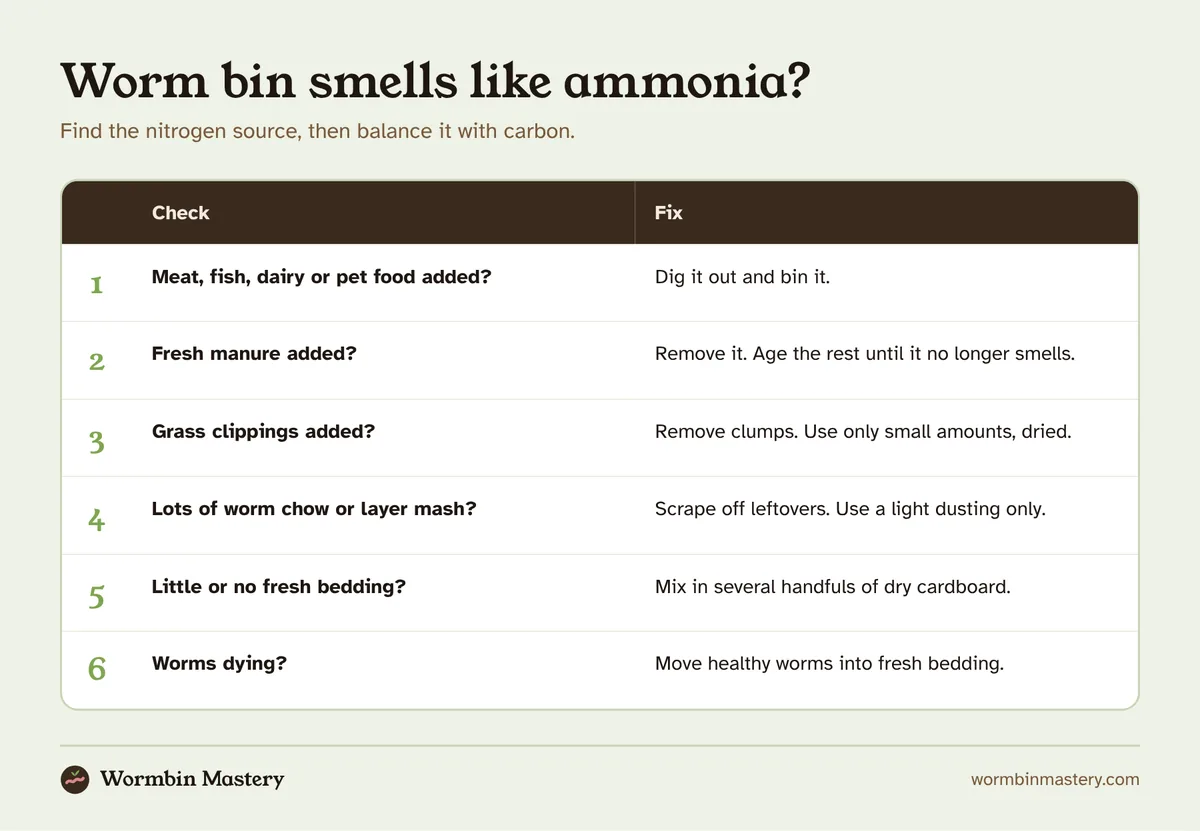
- Protein-rich food. Meat, fish, dairy, eggs, beans and pet food in quantity.
- Fresh manure. Especially poultry manure or manure mixed with urine. See manure for worms.
- Grass clippings. Fresh clippings are very high in nitrogen and heat up.
- Too much worm chow or grain feed, especially high-protein layer mash.
- Not enough carbon. Bedding that’s been eaten down to castings with no fresh cardboard added.
 Related guideWhy Are My Worms Dying? 9 Causes and How to Fix Them
Why ammonia harms worms
Worms breathe through their skin. Ammonia dissolves in the moisture on their bodies and irritates or burns them. Signs include:
- Worms trying to escape
- Worms clumped at the far side of the bin
- Worms with pale, swollen or damaged-looking sections
- Dead worms near the source of the smell
In serious cases, rich protein overload can lead to what worm keepers call protein poisoning. See protein poisoning in worms.
How to fix a worm bin that smells like ammonia
- Find and remove the source. Dig out meat, dairy, fresh manure, clumps of grass or piles of feed.
- Add lots of dry carbon. Several big handfuls of shredded cardboard, newspaper or dry leaves. Mix it gently into the affected area.
- Aerate. Fluff the bedding with a hand fork so gas can escape. See how to aerate a worm bin.
- Leave the lid ajar for a few hours in a lit, ventilated room.
- Stop feeding for about a week.
- Check daily. The smell should fade within a few days.
If the smell is strong and worms are dying, move healthy worms into fresh bedding using our rescue method.
How to prevent ammonia smells
- Balance greens and browns. Add roughly equal volumes of dry carbon and food scraps.
- Keep protein out. No meat, fish, dairy or pet food. See foods to never feed worms.
- Age manure until it no longer smells or heats up.
- Skip fresh grass clippings, or dry them first and add only a little.
- Use worm chow sparingly.
- Refresh bedding regularly as old bedding becomes castings.
When a worm bin smells like ammonia after harvesting
Sometimes the smell appears right after you harvest and add fresh bedding. This usually happens because a big batch of food went in at the same time as the worms were disturbed and their numbers temporarily dropped. The microbes break the food down before the worms can eat it. Add extra dry cardboard and feed lightly for the first week after harvesting.
When a worm bin smells like ammonia in summer
Heat speeds up decomposition, so nitrogen-rich food breaks down faster in summer and releases ammonia sooner. Feed less in hot weather, keep the bin cool and add more carbon. Our summer heat guide covers cooling tactics.
Testing whether the fix worked
After a few days, open the lid and smell close to the bedding where the source was. A faint earthy smell means it’s working. If the ammonia is still sharp, dig a little deeper. There may be a hidden pocket of protein or manure. Repeat the carbon and aeration steps.
Ammonia vs other bad smells
Different smells point to different problems:
- Ammonia (sharp, cat litter): too much nitrogen.
- Sour or vinegary: too acidic, often too much fruit. See worm bin sour smell.
- Rotten eggs (sulfur): anaerobic, waterlogged bin. See anaerobic worm bin.
- Rotting food: overfed. See overfeeding worms.
A healthy bin smells like damp earth or forest floor.
Further reading: The US EPA’s Composting at Home page explains balancing greens and browns, the main fix when a worm bin smells like ammonia, and Oregon State University Extension’s Composting with Worms (EM 9034) lists foods to avoid.
Frequently asked questions
Is an ammonia smell dangerous to me?
In a home bin, the amount is small. It’s mainly a problem for the worms. Ventilate the room while you fix it.
How long does it take to fix?
Usually two to five days after removing the source and adding carbon.
Can I use castings from a bin that smelled of ammonia?
Yes, once the smell is gone and the castings are finished. Let them cure for a couple of weeks. See how to store worm castings.
Why does my bin smell of ammonia after adding manure?
The manure wasn’t aged enough. Remove it, add carbon and age the rest longer.