
Worms will eat a remarkable range of kitchen scraps, but there are some foods you should never feed worms. But a few common foods cause most of the trouble in worm bins: bad smells, flies, rodents, overheating and, in the worst cases, dead worms. Keeping these out is easier than fixing the problems they cause.
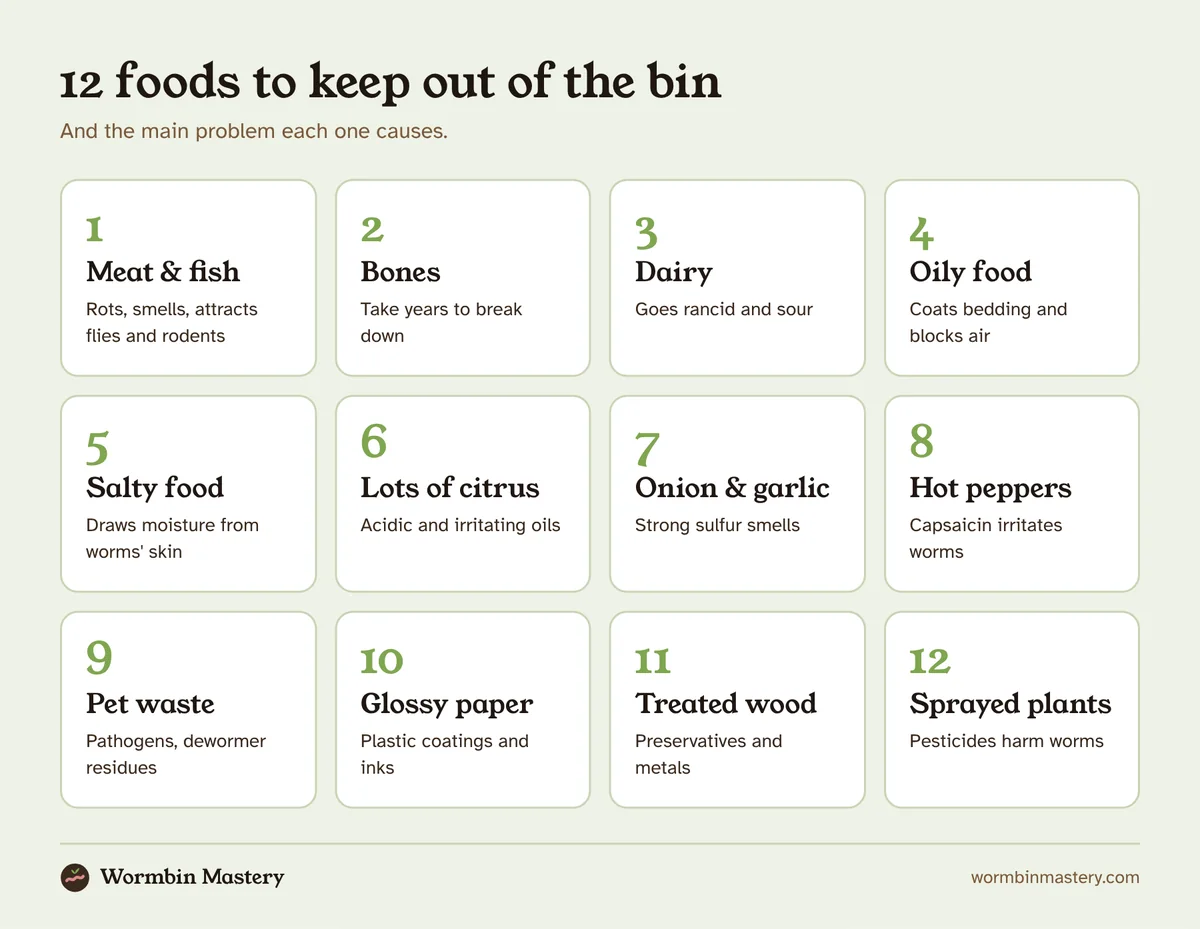
1. Meat, poultry and fish
Animal flesh rots rather than composts in a small bin. It produces strong odors, attracts flies that lay eggs in it, and can draw rodents and raccoons to an outdoor bin. Large amounts can also release ammonia as protein breaks down, which is toxic to worms.
Instead: Use a municipal food waste collection if your area has one, or a bokashi bucket, which ferments meat and dairy safely before burying.

2. Bones
Bones take years to break down in a worm bin and often carry meat residue that causes the problems above.
Instead: Municipal food waste collection, or bokashi followed by burial in the garden.
 Related guideCan Worms Eat Citrus? Orange, Lemon and Lime Peels Explained
3. Dairy products
Cheese, milk, yogurt, cream and butter go rancid and sour quickly. They smell terrible and attract pests. Fats coat bedding and reduce airflow.
Instead: Small amounts of plain yogurt can go in a large hot compost pile. Otherwise, use food waste collection.
4. Oily and greasy food
Fried food, salad dressings, oily leftovers and cooking fat form a film over food and bedding. This blocks air, slows decomposition and can suffocate worms, which breathe through their skin.
Instead: Wipe greasy plates with paper towel and put the towel in the trash, not the bin. Let cooking fat solidify and throw it out.
5. Salty food
Salt draws moisture out of worms’ skin and can kill them. Chips, salted nuts, pickles, soy sauce-soaked leftovers and heavily processed food all carry a lot of salt.
Instead: Trash or municipal collection.
6. Large amounts of citrus
Citrus peels are acidic and contain oils such as limonene that irritate worms. A few pieces in a large, well-buffered bin are fine. A whole bag of juiced oranges is not, and it can drop the bin’s pH enough to drive worms out.
Instead: Hot compost pile, or dry the peels for use as natural cleaners or fire starters.
7. Onions, garlic and leeks in bulk
These release strong sulfur compounds as they break down. Worms tend to avoid them until they’ve partly decomposed, and large amounts smell unpleasant indoors.
Instead: Small amounts mixed with other scraps are fine. Put larger quantities in an outdoor compost heap.
8. Hot peppers
Capsaicin, the compound that makes chilies hot, can irritate worms. Bell peppers are fine.
Instead: Outdoor compost, or dry and use the seeds.
9. Dog and cat waste
Carnivore feces can carry parasites and pathogens that survive worm composting. Unlike a hot compost pile, a worm bin doesn’t reach temperatures high enough to kill them. Many pet dewormer medications are also toxic to composting worms. Our guide to castings vs compost explains the temperature difference.
Instead: Dispose of pet waste as your local council or city recommends. Herbivore manure, such as well-aged rabbit or horse manure from animals not recently dewormed, is a different matter and can be excellent worm food.
10. Glossy, coated or colored paper
Magazines, wrapping paper, receipts and coated cardboard can contain plastic coatings, clay fillers and inks you don’t want in your castings. Thermal receipts often contain BPA or BPS.
Instead: Recycling bin. Plain cardboard and black-and-white newspaper are fine for worms.
11. Treated wood, sawdust or charcoal ash
Sawdust from treated or painted wood can contain preservatives and heavy metals. Charcoal ash and barbecue briquette ash are alkaline and often contain additives.
Instead: Untreated sawdust in small amounts is fine as bedding. Dispose of treated material and briquette ash in the trash.
12. Plants treated with pesticides
Some systemic pesticides persist in plant tissue, and some garden chemicals are toxic to worms. Commercially sprayed flowers and lawn clippings from treated grass are the main concerns.
Instead: Wash store-bought produce scraps, which is good practice anyway. Keep treated clippings and bouquet flowers out.
Foods you never feed worms vs “maybe” foods
Several foods sit in the middle: fine in small amounts, trouble in bulk. These include bread, cooked rice and pasta, pineapple, tomatoes and very watery fruit. The full breakdown is in our complete worm food list.
Signs you’ve fed something wrong
- A sour or rotten smell within a day or two of feeding. See worm bin smells.
- Worms climbing the walls or crowding on the lid. See why worms leave the bin.
- A sudden fly problem after feeding. Read how to get rid of fruit flies.
- White or colored fuzz spreading across food. See mold in a worm bin.
How to fix a mistake
If something from this list made it into your bin:
- Dig it out if you can find it.
- Add a few handfuls of dry shredded cardboard to soak up moisture and odors.
- Skip the next one or two feedings.
- Leave the lid off for an hour or two with a light on overhead to let the bin air out.
Most bins recover within a week. If worms are dying, our guide to why worms die walks through other causes to rule out.
Quick reference: what to do with each
| Food | Better destination |
|---|---|
| Meat, fish, bones, dairy | Food waste collection or bokashi |
| Oily, salty, processed food | Trash or food waste collection |
| Lots of citrus, onion, garlic | Outdoor hot compost |
| Hot peppers | Outdoor compost |
| Pet waste | As your local council or city advises |
| Glossy paper, receipts | Recycling or trash |
| Treated wood, briquette ash | Trash |
| Sprayed plants, treated clippings | Green waste collection |
Further reading: The US EPA’s Composting at Home page and NC State Extension’s Worms Can Recycle Your Garbage both list the same foods to never feed worms or compost at home.
Frequently asked questions
Can worms eat eggs?
Crushed, dried eggshells are great. Raw or cooked egg itself is animal protein and can smell as it breaks down, so leave it out.
Is a small amount of meat really a problem?
A tiny scrap in a large established bin probably won’t cause disaster, but it rarely brings benefits and often brings flies. It’s simpler to keep all meat out.
Can I put moldy food in the worm bin?
Moldy fruit and vegetables are fine. Mold is part of decomposition. Avoid moldy bread, cheese or meat, which bring the problems listed above.
Are tea bags safe for worms?
Many tea bags contain plastic to seal them. Tear them open and add only the leaves, or use plastic-free brands. Loose tea leaves are always fine.