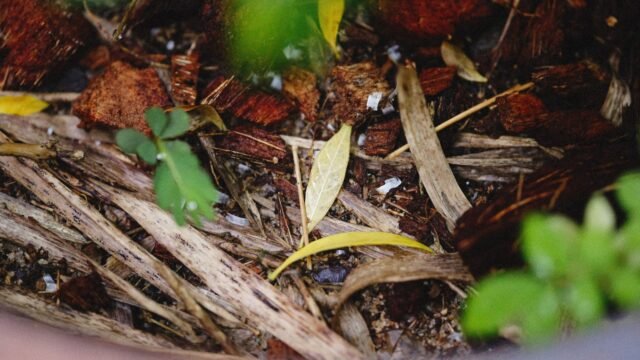

Can worms eat citrus? Yes, in small amounts and prepared the right way. Orange, lemon, lime and grapefruit peels won’t poison a worm bin, but they’re acidic and contain oils (mainly limonene) that composting worms dislike. Add too much and the bedding turns sour, worms stop eating and some may try to leave.
This guide explains how much citrus is safe, how to prepare it, and when to skip it altogether.
Quick answer
- A little citrus is fine: think a few small pieces of peel per pound of worms each week.
- Chop it small, freeze it, or let it sit until it softens first.
- Mix it with plenty of other food and bedding.
- Skip citrus completely in new bins, acidic bins or bins with lots of mites.
Why citrus is tricky for worms
Acidity
Citrus fruit is acidic. In small amounts, the bin’s microbes and bedding buffer it. In large amounts, the bedding becomes acidic, which composting worms dislike. Acidic bins also encourage white mites and pot worms. Read more in our worm bin pH guide.
Oils
Citrus peels contain limonene and other aromatic oils. These are natural insect repellents and can irritate worms’ skin. The oils break down over time, which is why aged or pre-composted peel is safer than fresh.
Slow breakdown
Thick, waxy peels take longer to soften than most scraps, so they sit in the bin longer and are more likely to mold. Mold itself isn’t a problem, but uneaten peel does nothing for your worms.
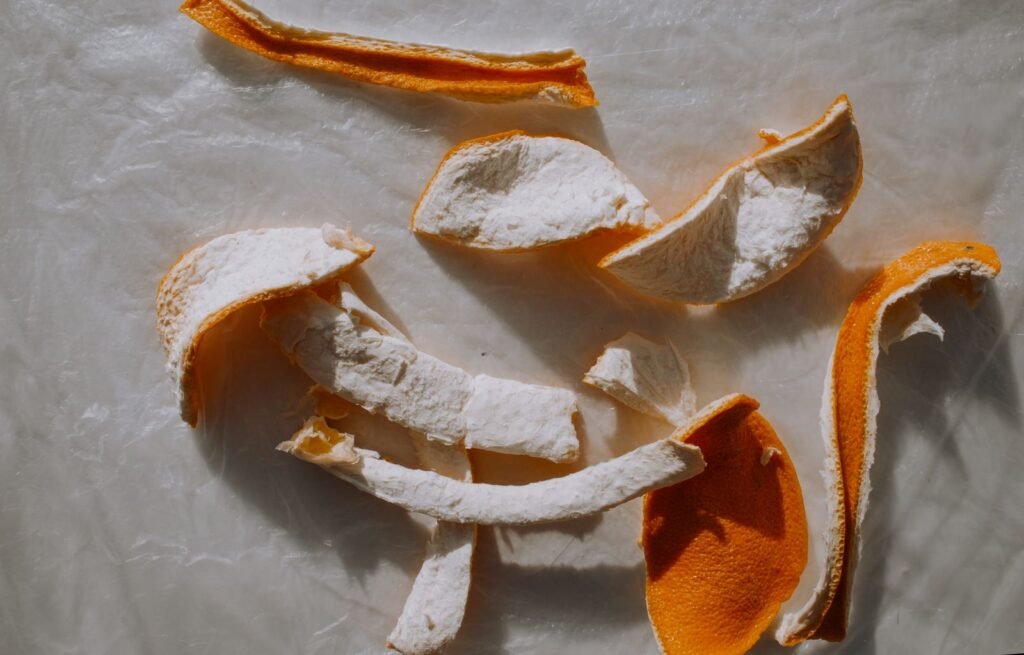
Can worms eat citrus every week? How much is safe
There’s no exact limit, but a good rule is:
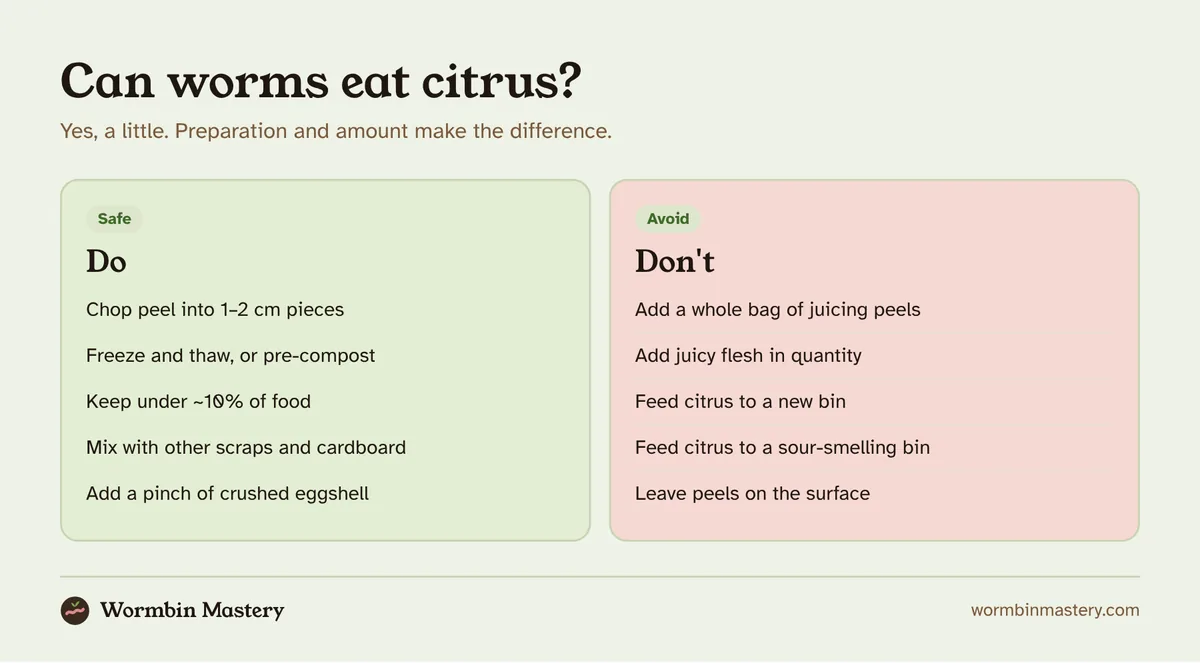
- Keep citrus under about 10% of the food you add. For a typical home bin, that’s the peel of one orange or a couple of lemon halves per week.
- Add it with other foods, never on its own.
- Spread it out. One small portion a week is better than a bag of peels at once.
If you juice a lot of citrus, the leftover peel is better suited to an outdoor compost heap, where it won’t affect worms. See vermicomposting vs composting.
 Related guide12 Foods to Keep Out of Your Worm Bin, and Why
How to prepare citrus for a worm bin
- Chop small. Pieces of 1–2 cm (½–¾ in) break down far faster.
- Freeze and thaw. Freezing softens the peel and helps oils break down.
- Pre-compost. Leave peels in a covered bucket with some other scraps for one to two weeks until soft.
- Bury and balance. Bury with other food and add a handful of dry cardboard and a pinch of crushed eggshell to buffer the acid.
Can worms eat citrus that has gone moldy?
Yes, moldy citrus is no worse than fresh citrus, and the mold has already started breaking down the peel. Green and blue molds on citrus are common and harmless to worms in small amounts. Bury moldy peel under bedding so spores don’t spread around your kitchen, and treat it as part of your weekly citrus allowance.
What about citrus in prepared foods?
Small amounts of citrus in leftover salads or vegetable dishes are fine, as long as the food isn’t oily or salty. Avoid marinades, dressings and anything with vinegar, oil or salt. Plain, unseasoned vegetable scraps are always the safer choice.
Which citrus is worst?
All citrus is acidic, but some is gentler than others:
- Orange and mandarin peel: the most common and mildest in small amounts.
- Lemon and lime: more acidic. Use sparingly.
- Grapefruit: thick peel, slow to break down. Chop well.
- Whole citrus fruit or pulp: the juice is very acidic. Avoid adding juicy flesh in quantity.
When to skip citrus completely
- New bins. In the first month, keep food gentle and easy.
- Bins with a sour or vinegary smell. The bin is already acidic.
- Lots of white mites or pot worms. Both thrive in acidic conditions.
- Worms trying to escape. Remove recent citrus and check the escaping worms checklist.
Signs you’ve added too much citrus
- A sharp, sour smell
- Worms avoiding the area where peels are buried
- Large numbers of tiny white mites
- Peels sitting untouched for weeks
- Worms clumping or trying to leave
If you see these, remove the visible citrus, add dry cardboard and a spoonful of finely ground eggshell, and pause feeding for a week.
A simple weekly citrus routine
- Keep a small container for citrus peel in the freezer.
- Once a week, take out a small handful and let it thaw.
- Chop any large pieces.
- Mix it into the week’s other scraps.
- Bury the mix in a new spot with a handful of dry cardboard.
- Next week, check that spot. If the peel is gone or soft and covered in worms, you’re at a safe level. If it’s still firm and worms are avoiding it, cut back.
This routine answers can worms eat citrus for your own bin: their response tells you.
Better uses for citrus peel
If you have lots of citrus waste, consider:
- An outdoor compost heap
- Drying peels for zest or homemade cleaning vinegar
- Municipal food waste collection
Our foods to never feed worms guide lists other foods to limit, and the can worms eat it checker gives a quick answer for any food.
Further reading: Oregon State University Extension’s Composting with Worms (EM 9034) advises limiting acidic foods like citrus, and NC State Extension’s Worms Can Recycle Your Garbage answers can worms eat citrus among other common food questions.
Frequently asked questions
Will citrus kill my worms?
Not in small amounts. Large amounts make the bin acidic and stressful, and stressed worms may leave or die.
Can worms eat orange peels?
Yes, a few chopped, frozen or aged pieces a week, mixed with other food.
Can I use lemon juice to clean my worm bin?
No. Clean bins with plain water only.
Is citrus OK in an outdoor compost heap?
Yes. Heaps handle citrus easily because there are no worms concentrated in one small space and the volume dilutes acidity.