
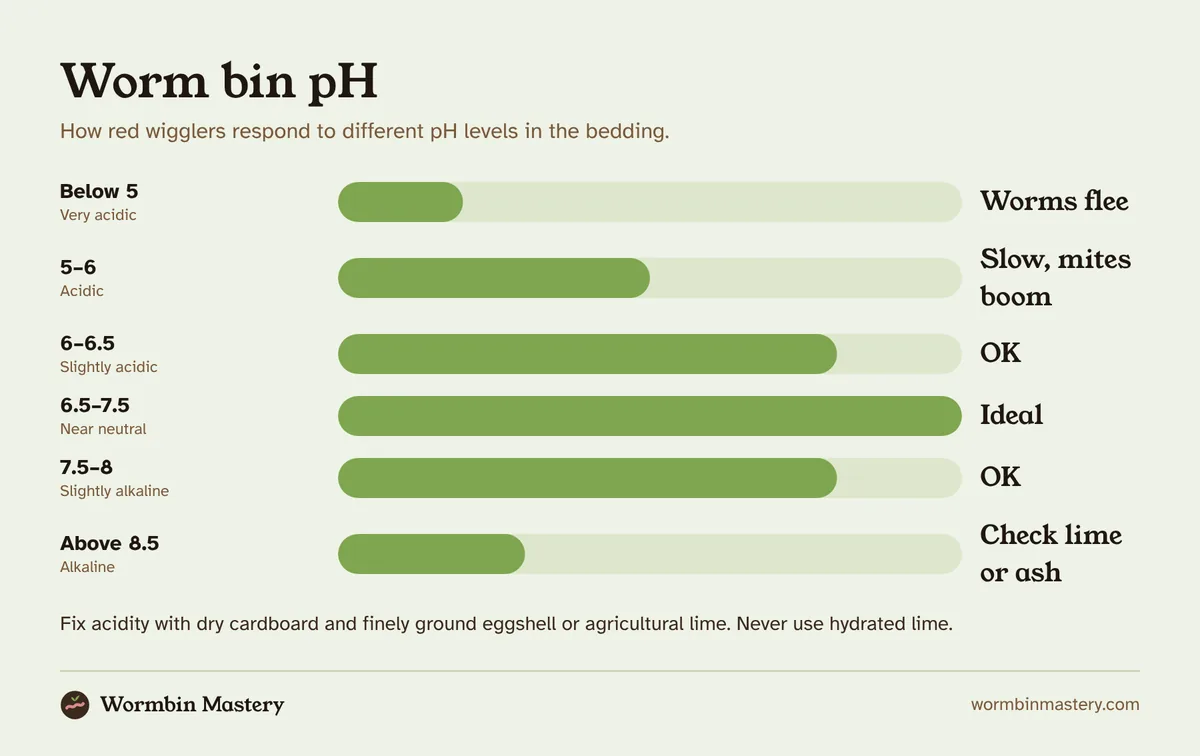
Worm bin pH is a measure of how acidic or alkaline the bedding is. Composting worms are fairly tolerant, but they’re happiest when the bedding is close to neutral, roughly pH 6 to 8. When a bin becomes acidic, worms slow down, mites and pot worms take over, and some worms may try to leave.
This guide explains the ideal range, how to test worm bin pH at home, why bins become acidic and how to fix it safely.
Quick answer
- Ideal worm bin pH: about 6–8, with 6.5–7.5 as a sweet spot.
- Most common problem: an acidic bin from too much fruit, citrus, coffee or overfeeding.
- Signs: sour or vinegary smell, lots of white mites, worms avoiding food or escaping.
- Fix: stop acidic foods, add dry cardboard and finely ground eggshell or agricultural lime.
Why worm bin pH matters
Worms breathe through moist skin and are sensitive to their surroundings. Strong acidity irritates them and changes which microbes thrive. In an acidic bin:
- Worms eat less and may avoid parts of the bin.
- Breeding slows.
- White mites and white pot worms boom.
- Food breaks down more slowly.
Highly alkaline bins are rare and usually caused by adding too much lime or ash.
What makes a worm bin acidic?
- Overfeeding. Rotting food releases acids. This is the most common cause. See overfeeding worms.
- Lots of fruit. Especially soft, sugary fruit that ferments.
- Citrus, tomatoes and pineapple in large amounts. See can worms eat citrus.
- Coffee grounds in bulk. Used grounds are only mildly acidic, but large amounts add up.
- Bread and grains in quantity, which ferment.
- Wet, airless conditions. Anaerobic breakdown produces acids.
- Peat moss bedding, which is naturally acidic.
 Related guideWorm Bin in Winter: How to Keep Worms Alive and Working
How to test worm bin pH
pH test strips
Mix a tablespoon of bedding with a few tablespoons of distilled water in a clean cup. Stir, wait ten minutes and dip a pH strip in the liquid. Compare the color.
Soil pH meter
A garden pH probe pushed into moist bedding gives a quick reading. Cheap meters are not very precise, but they’re useful for spotting big changes.
Soil test kit
Garden test kits that use a powder and color chart work on bedding too.
The “smell and look” test
You don’t need a meter to spot an acidic bin. A sour, vinegary or fermented smell, masses of white mites and white pot worms, and worms gathering on the walls are strong clues.
How to fix an acidic worm bin
- Stop adding acidic foods such as citrus, tomatoes, fruit and coffee for a couple of weeks.
- Remove sour, rotting food from the surface.
- Add dry carbon. Several handfuls of shredded cardboard or newspaper absorb moisture and acids.
- Add a buffer. Sprinkle one to two tablespoons of finely ground eggshell or agricultural lime (calcium carbonate) over the surface and gently mix it into the top layer.
- Aerate. Fluff the bedding with a hand fork to let air in.
- Wait a week, then test again or check smell and mite numbers.
Never use hydrated (slaked) lime, quicklime or wood ash in large amounts. They’re strongly alkaline and can burn worms.
Keeping pH balanced long-term
- Add a little ground eggshell every few weeks. See grit for worms.
- Balance every feeding with dry carbon.
- Limit citrus, onions and lots of soft fruit.
- Don’t overfeed.
- Keep moisture at the wrung-out sponge level.
- Use coir or cardboard instead of large amounts of peat moss.
Worm bin pH and mites
Tiny white mites are one of the most visible signs of an acidic bin. They’re mostly harmless decomposers, but they thrive on soft, sugary, fermenting food in acidic conditions and can cover food in a white crust. Correcting worm bin pH with eggshell and dry carbon, and cutting back fruit, usually brings mite numbers down within two weeks. See mites in a worm bin for identification.
Worm bin pH and white worms
Small white pot worms (enchytraeids) also prefer acidic, wet bedding. They’re harmless to red wigglers but often outcompete them for food when pH drops. A sudden explosion of white worms is a strong clue that the bin needs buffering. Our white worms in a worm bin guide explains how to tell them from baby red wigglers.
A quick weekly pH routine
- Smell the bin when you open it. Earthy means fine.
- Look at the last feeding spot. Lots of white mites or white worms? Add a spoonful of eggshell powder.
- Check the balance of foods you’ve added this week. Lots of fruit or citrus? Add more vegetables and cardboard next time.
- Test with strips or a meter only if the smell or mites persist.
What about an alkaline bin?
If your worm bin pH reads above about 8.5, think about what you’ve added: lime, wood ash, lots of eggshell or alkaline water. Stop adding them, and add some fruit scraps, coffee grounds and fresh bedding. Alkaline bins usually correct themselves quickly as food breaks down.
pH and finished castings
Finished worm castings are usually close to neutral, which is one reason they’re so gentle on plants. Even castings from a slightly acidic bin tend to settle toward neutral once cured. See how to store worm castings for curing tips.
Further reading: The UConn Soil Nutrient Analysis Laboratory’s Vermicomposting fact sheet discusses worm bin pH, and Oregon State University Extension’s Composting with Worms (EM 9034) explains how to avoid acidic conditions.
Frequently asked questions
What pH do red wigglers prefer?
About 6 to 8, close to neutral.
Can I use baking soda to raise pH?
It’s not recommended. It adds sodium, which isn’t good for worms or plants. Eggshell or agricultural lime is safer.
Do coffee grounds make a worm bin acidic?
Used coffee grounds are only mildly acidic. In normal amounts they’re fine; very large amounts can lower pH.
How often should I test pH?
Only when something seems wrong. A bin that smells earthy and has active worms doesn’t need testing.