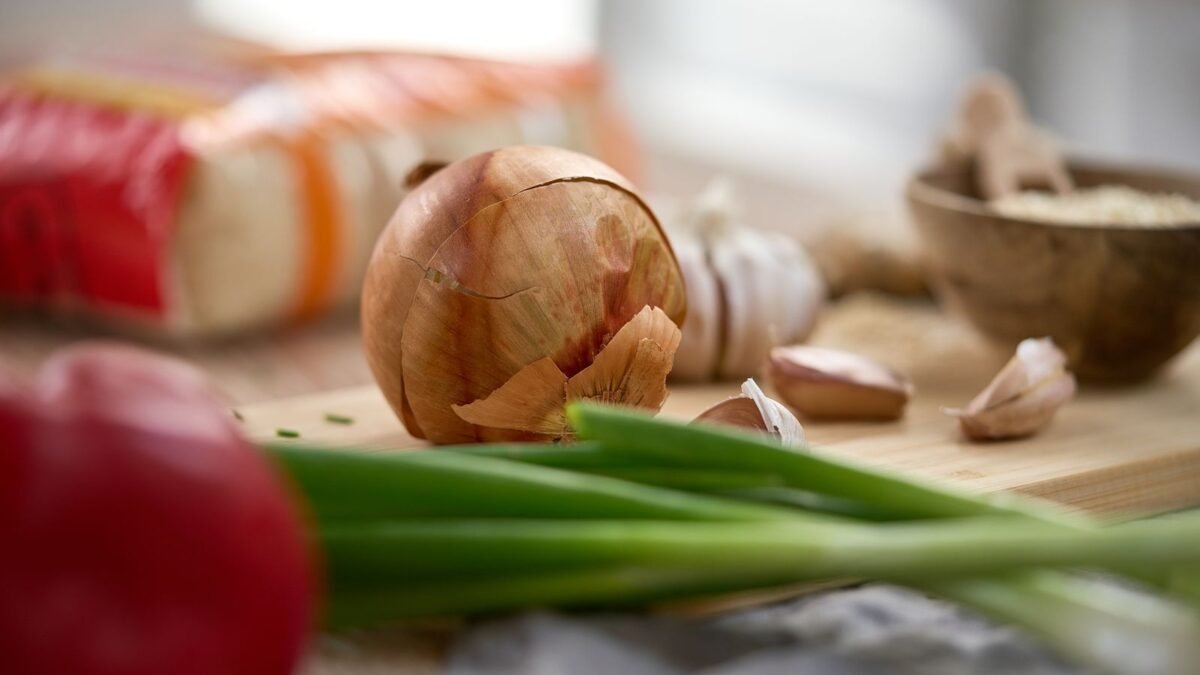
Onions and garlic are two of the most common kitchen scraps, and two of the most debated worm foods. They won’t kill composting worms in small amounts, but they’re strong-smelling, sulfur-rich and slow to break down. Large quantities can make a bin smell, turn acidic and send worms to the far corners.
This guide explains why onions and garlic are a problem, how much is safe and how to prepare them if you want to add some.
Quick answer
- Small amounts of onion and garlic skins and trimmings are fine.
- Keep raw onion and garlic flesh to a minimum, and never add whole bulbs.
- Chop, freeze or pre-compost anything you add.
- Cooked onion and garlic are fine only if they’re not oily, salty or mixed with other problem foods.
Why worms dislike onions and garlic
Sulfur compounds
When onions and garlic are cut or crushed, they release sulfur compounds. These are what make your eyes water and give garlic its smell. They’re also natural defenses against soil organisms. Worms tend to avoid areas of the bin with lots of fresh, raw onion or garlic.
Smell
As onions and garlic break down, they can produce strong, unpleasant smells, especially in a wet or overfed bin. Indoors, that’s reason enough to limit them. If your bin already smells, read our sour smell guide.
Acidity
Onions are mildly acidic. In bulk they can lower the bin’s pH, which encourages mites and makes worms uncomfortable. See worm bin pH.
Slow breakdown
Onion and garlic flesh is firm and layered, and papery skins are tough. They sit in the bin a long time before worms can eat them.
Which parts are safe?
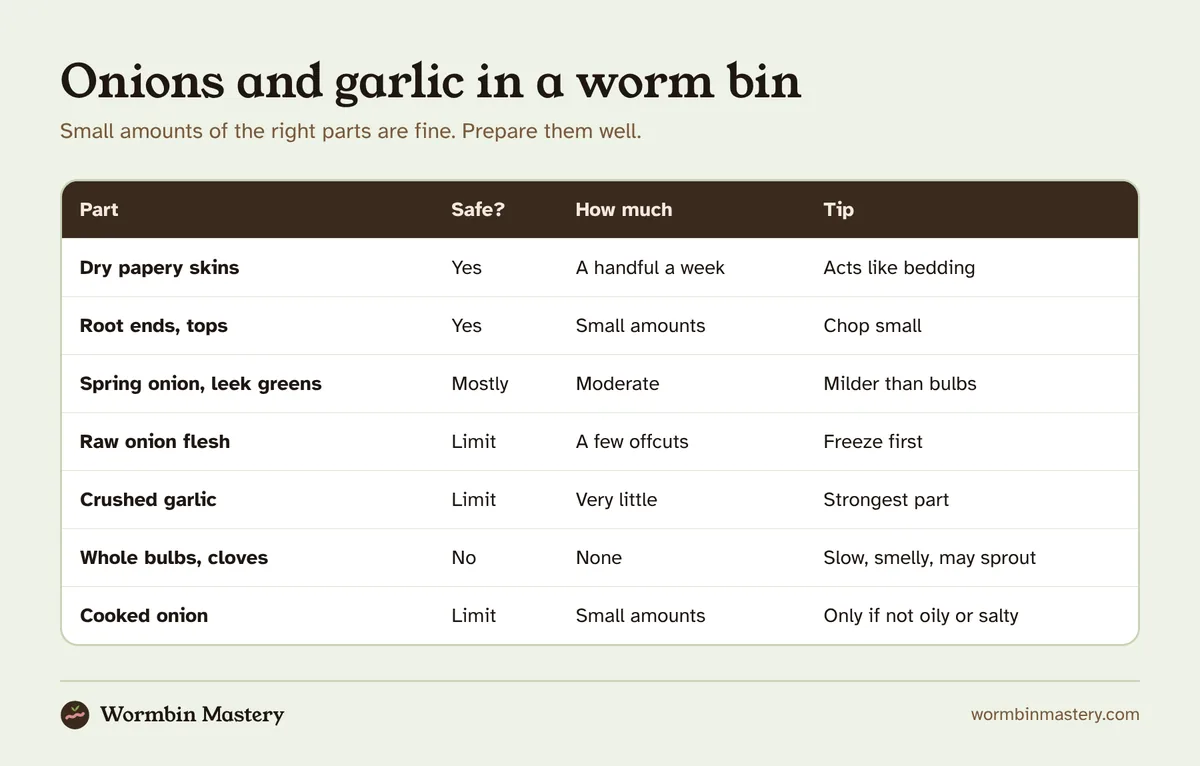
- Dry papery skins: the safest part. They act more like bedding than food and break down slowly without much smell.
- Root ends and tops: fine in small amounts, chopped.
- Green tops of spring onions and leeks: milder and softer; generally fine in moderation.
- Raw flesh: keep to a minimum. A few pieces of offcut is fine; half an onion is not.
- Whole bulbs and sprouting cloves: avoid. They’re slow, smelly and can even sprout.
- Cooked onion and garlic: fine in small amounts if not oily or salty.
 Related guideCan Worms Eat Citrus? Orange, Lemon and Lime Peels Explained
How much onions and garlic can a worm bin take?
A good rule of thumb is to keep onions and garlic to a small part of your weekly scraps, roughly a handful of skins and offcuts per pound of worms per week. In a large, established bin you can add a little more. In a new bin, skip them for the first month.
If you cook with lots of onions and garlic, put most of the waste in an outdoor compost heap or municipal food waste collection, and give the worms only the skins.
How to prepare onions and garlic for worms
- Chop small. Smaller pieces break down faster and release smell sooner, when buried deep.
- Freeze first. Freezing softens tissue and helps sulfur compounds dissipate.
- Let them age. Leave offcuts in a covered container for a week before feeding.
- Bury deep. At least 5 cm (2 in) under bedding.
- Balance with carbon. Add extra dry cardboard to the same spot.
- Mix with gentle foods. Bury them with melon rind, lettuce or squash rather than alone.
Signs you’ve added too many
- A sharp, sulfurous or sour smell when you open the bin
- Worms avoiding the area where onions are buried
- Onion pieces sitting untouched for weeks
- Lots of white mites or fruit flies
- Worms gathering on the lid
If this happens, dig out the visible onion and garlic, add a few handfuls of dry shredded cardboard and stop feeding for a week.
What about leeks, shallots and chives?
They belong to the same plant family and contain similar compounds. Leeks and chives are milder than onions and garlic and generally fine in moderate amounts. Shallots are similar to onions. The same preparation rules apply.
Onions and garlic vs other “maybe” foods
Onions and garlic belong in the same group as citrus, spicy peppers and tomato in large amounts: not banned, but worth limiting. Our can worms eat citrus guide explains a similar approach. For the full list of foods to avoid, see foods to never feed worms, or check any food in the can worms eat it tool.
A practical weekly routine
If your household cooks with onions and garlic most days, a simple routine keeps the worms happy:
- Keep two containers by the chopping board: one for the worm bin, one for the compost heap or food waste bin.
- Put dry skins and the odd root end in the worm container.
- Put larger offcuts, whole spoiled bulbs and cooked leftovers in the other container.
- Freeze the worm container’s contents through the week.
- On feeding day, mix the thawed skins with softer scraps like melon rind or lettuce and bury them in one spot with extra cardboard.
- Check that spot a week later. If it’s soft and busy with worms, you’re adding the right amount.
What about onion and garlic in worm castings?
Once worms and microbes have processed them, onions and garlic leave no smell or harmful residue in finished castings. The concern is only about the living bin, not the end product.
Common myths
- “Garlic kills worms.” Not in small amounts. Large amounts of fresh, crushed garlic can harm worms in a small bin, but a few skins won’t.
- “Onions will make the whole bin smell forever.” Smell fades quickly once onions are gone and carbon is added.
- “Cooked onions are always safe.” Only if they’re not swimming in oil or salt.
Further reading: NC State Extension’s Worms Can Recycle Your Garbage lists foods to limit, and Oregon State University Extension’s Composting with Worms (EM 9034) explains why strong foods like onions and garlic should be limited in small bins.
Frequently asked questions
Can worms eat onion skins?
Yes. Dry onion skins are one of the safer parts and break down slowly like bedding.
Will garlic repel worms?
Fresh crushed garlic in large amounts can. A few skins or offcuts won’t.
Can I add onion and garlic in a stacking tray bin?
Yes, in the same small amounts. Trays are shallow, so bury them well and add extra carbon.
Should I put onions in my compost heap instead?
Yes, if you produce a lot. A compost heap handles larger amounts without affecting worms directly.