

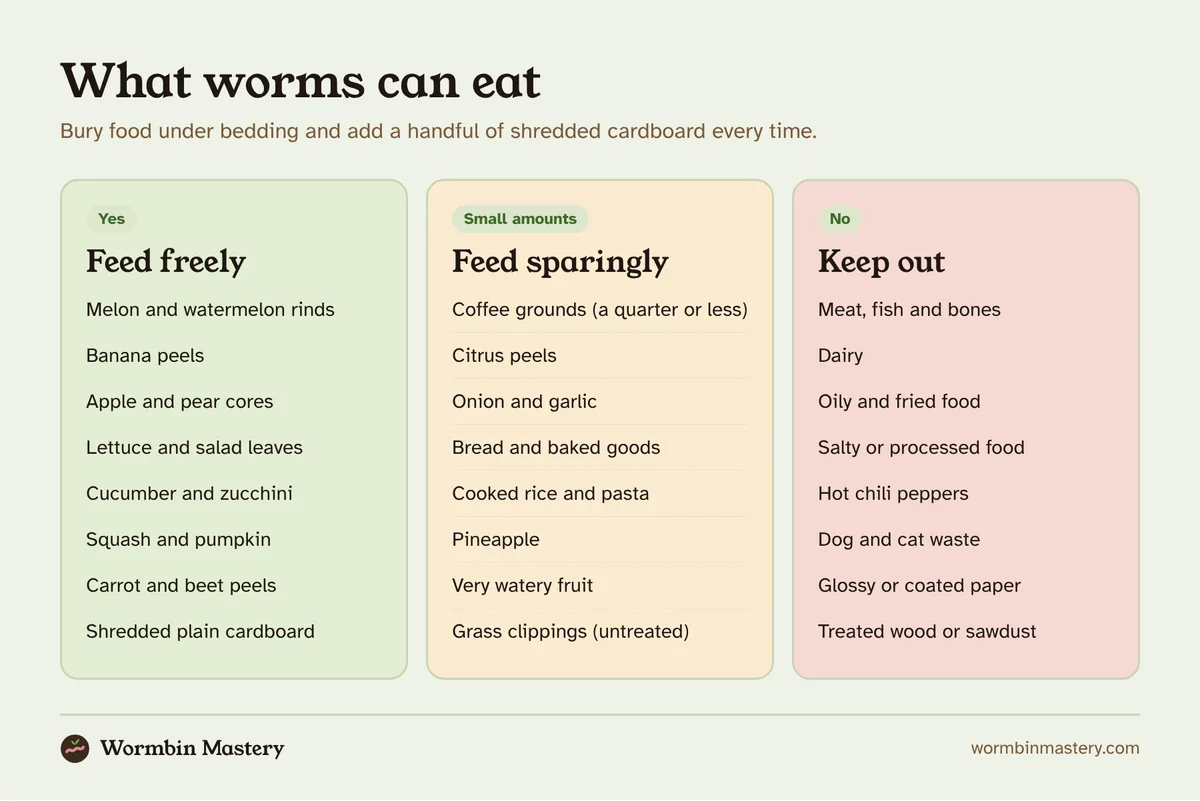
What can worms eat? Composting worms aren’t fussy, but they aren’t garbage disposals either. What you feed them affects how fast they work, how the bin smells and whether you get fruit flies. This list covers the foods you can give them freely, the ones to limit, and the few things that should never go in.
How worms actually eat
Worms don’t chew. They have no teeth. Instead, bacteria and fungi start breaking food down, and worms eat the softened material along with the microbes on it. Their muscular gizzard grinds it with tiny bits of grit.
That has two practical consequences:
- Soft, wet, partly decomposed food disappears fastest. A melon rind vanishes in days. A raw carrot can last weeks.
- Smaller pieces break down faster. More surface area means more microbes working on it.
What can worms eat? Foods worms love
These are safe to feed regularly and make up the bulk of a good worm diet.
Fruit scraps
- Melon and watermelon rinds (a favorite)
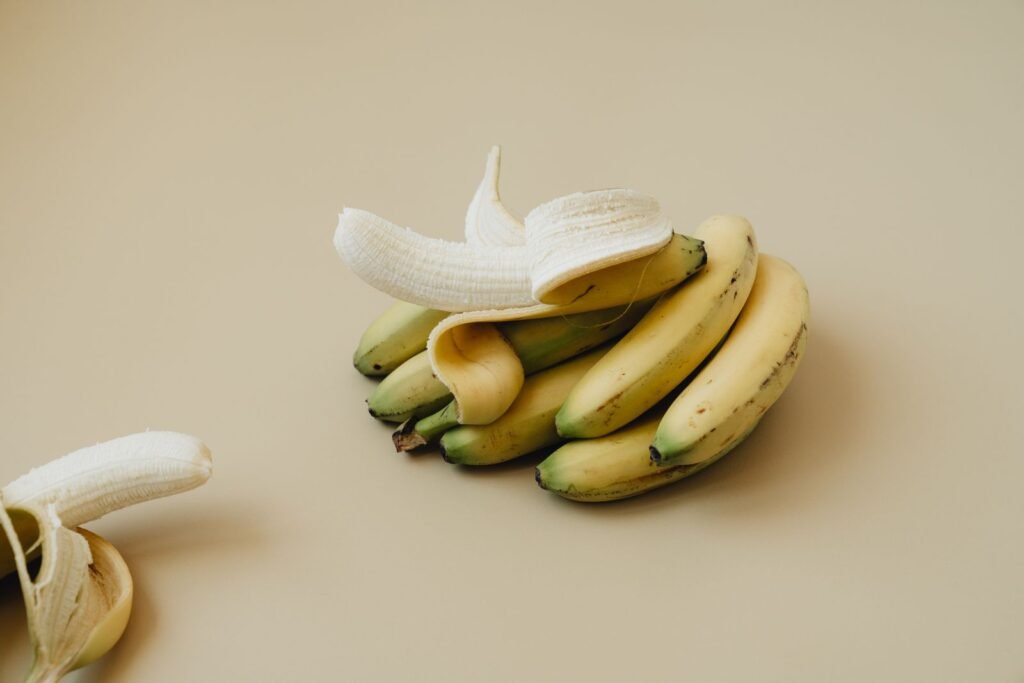
- Banana peels
- Apple and pear cores and peels
- Mango skins and pulp
- Berries past their best
- Stone fruit flesh (remove pits, which take years to break down)
- Papaya skins
Vegetable scraps
- Lettuce and salad leaves
- Cucumber and zucchini
- Pumpkin and squash flesh and skins
- Carrot and beet peels
- Celery ends
- Cabbage, kale and broccoli stems (cooked or chopped, as raw brassicas can smell as they break down)
- Corn cobs and husks (slow, but fine)
- Tomato scraps (seeds may sprout, which is harmless)
- Sweet potato and potato peels
Other good additions
- Coffee grounds and paper filters, in moderation. See our coffee grounds and eggshells guide.
- Crushed eggshells, dried and ground, for grit and calcium.
- Tea leaves from plastic-free tea bags or loose tea.
- Plain cooked rice, pasta and oats, in small amounts.
- Shredded cardboard, paper and egg cartons, which double as bedding.
- Fallen leaves, especially once they’ve started to break down.
 Related guideCan Worms Eat Citrus? Orange, Lemon and Lime Peels Explained
Foods to feed sparingly
These are fine in small amounts but cause problems in bulk.
Citrus peels
Orange, lemon, lime and grapefruit peels are acidic and contain oils that can irritate worms. A few pieces mixed into a large bin are fine. Don’t dump a whole juicing session in at once.
Onion and garlic
Strong-smelling and slow for worms to accept. Small amounts are usually tolerated, but large quantities tend to sit untouched and smell.
Bread and baked goods
Worms will eat bread, but it molds quickly and attracts pests. Tear it small, moisten it and bury it well. Avoid anything buttery or sugary.
Grains and starches
Cooked rice and pasta are fine in small portions. In large amounts they turn slimy and sour.
Very watery fruit
Watermelon and other high-water foods are favorites, but large amounts can make the bin wet. Balance them with extra shredded cardboard.
Spicy peppers
Chili and hot pepper scraps can irritate worms. Mild bell peppers are fine.
Foods to keep out
These cause smells, pests or harm to worms. Our list of foods to never feed worms explains each one in detail.
- Meat, fish and bones
- Dairy: cheese, milk, yogurt, butter
- Oily, greasy or fried foods
- Salty or heavily processed food
- Pet waste from dogs and cats
- Glossy or coated paper
- Anything treated with pesticides or chemicals, including sawdust from treated wood
Preparing food so worms eat it faster
Chop or tear
Cut scraps into pieces of 1 inch (2–3 cm) or smaller. A quick pulse in a food processor works even better for slower foods like carrots and broccoli stems.
Freeze first
Freezing ruptures plant cells, which softens food for worms after it thaws. It also kills fruit fly eggs on peels. Many people keep a scrap container in the freezer and feed the bin once a week. Read more in our guide to pre-composting and freezing scraps.
Let it start breaking down
Scraps that have sat for a few days in a closed container are already being worked on by microbes. Worms eat them faster. Just don’t let them get so far gone that they’re slimy and foul-smelling.
Mix in some carbon
Each time you add wet food, add a handful of dry shredded cardboard or paper. It soaks up moisture and keeps the balance between greens and browns. This one habit prevents most smell and moisture problems.
How much to feed
Food type matters, but quantity matters more. A new bin of one pound of worms can handle about a cup of chopped scraps a week at first. An established bin can eat considerably more. Our guide on how often to feed worms gives a week-by-week schedule for building up safely.
If you see food sitting untouched for more than a week, skip a feeding. That’s the simplest rule in worm keeping.
Sample weekly menu for a one-pound bin
Here’s what a balanced week of food might look like for a settled bin of about one pound of worms:
- 2 banana peels, chopped
- A handful of lettuce or salad leaves
- The rind from a wedge of melon
- Carrot and cucumber peelings
- One apple core
- 2 tablespoons of used coffee grounds
- 1 teaspoon of ground eggshell
- 2–3 large handfuls of shredded cardboard, mixed in with the food
That’s roughly 1–1.5 lb (450–700 g) of food, a typical weekly amount once a bin has been running for a couple of months.
Further reading: For another list of what worms can eat, see Oregon State University Extension’s Composting with Worms (EM 9034) and NC State Extension’s Worms Can Recycle Your Garbage.
Frequently asked questions
Can worms eat cooked vegetables?
Yes, as long as they’re plain. Avoid vegetables cooked with oil, butter, salt or sauces. Plain steamed or boiled leftovers are fine.
Can worms eat avocado?
The skin and flesh are fine. The pit is so hard that it takes months or years to break down, so leave it out or expect to find it when you harvest.
Can worms eat pineapple?
Yes, but feed it sparingly. Pineapple is acidic and contains an enzyme that breaks down protein. Small amounts mixed with other scraps are fine.
Do worms eat paper?
Yes. Plain paper, newspaper and cardboard are carbon-rich food as well as bedding. Avoid glossy magazines and paper with plastic coatings.
Can worms eat grass clippings?
Small amounts of untreated clippings are fine. Large piles heat up quickly as they decompose, which can overheat a bin. Never use clippings from lawns treated with weedkiller.


