

Worm castings for houseplants are one of the best uses for a home worm bin. Castings are gentle, rich in organic matter and beneficial microbes, and unlikely to burn roots, which makes them ideal for indoor plants that can’t rely on garden soil life.
This guide covers three ways to use castings indoors, how much to use and how often.
Quick answer
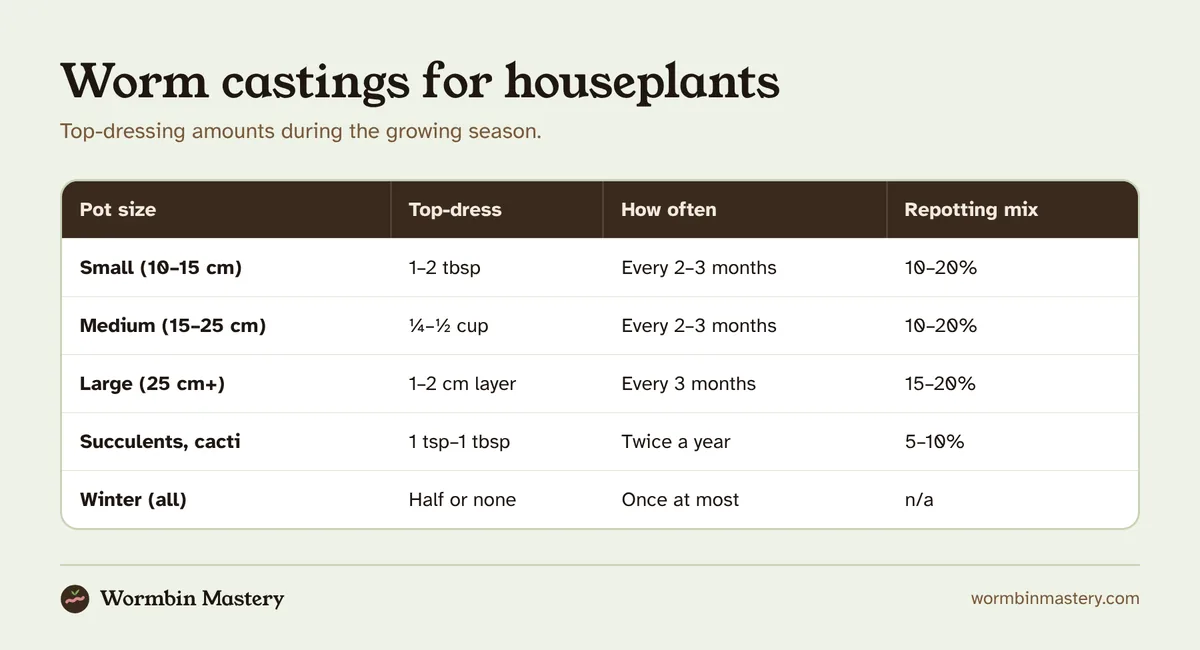
- Top-dress: 1–2 tablespoons for small pots, ¼–½ cup for medium pots, a thin 1–2 cm (½–¾ in) layer for large pots. Every 2–3 months in the growing season.
- Potting mix: 10–20% castings by volume when repotting.
- Worm tea: water with diluted tea every 2–4 weeks.
- Go lighter in winter and for succulents and cacti.
Why use worm castings for houseplants?
- Gentle nutrition. Castings release nutrients slowly and are unlikely to burn roots.
- Soil biology. Indoor potting mixes are often low in microbial life. Castings add beneficial microbes.
- Better structure. Castings improve moisture retention and aeration in potting mixes.
- Safe for most plants. From pothos to ferns to herbs.
Method 1: Top-dressing
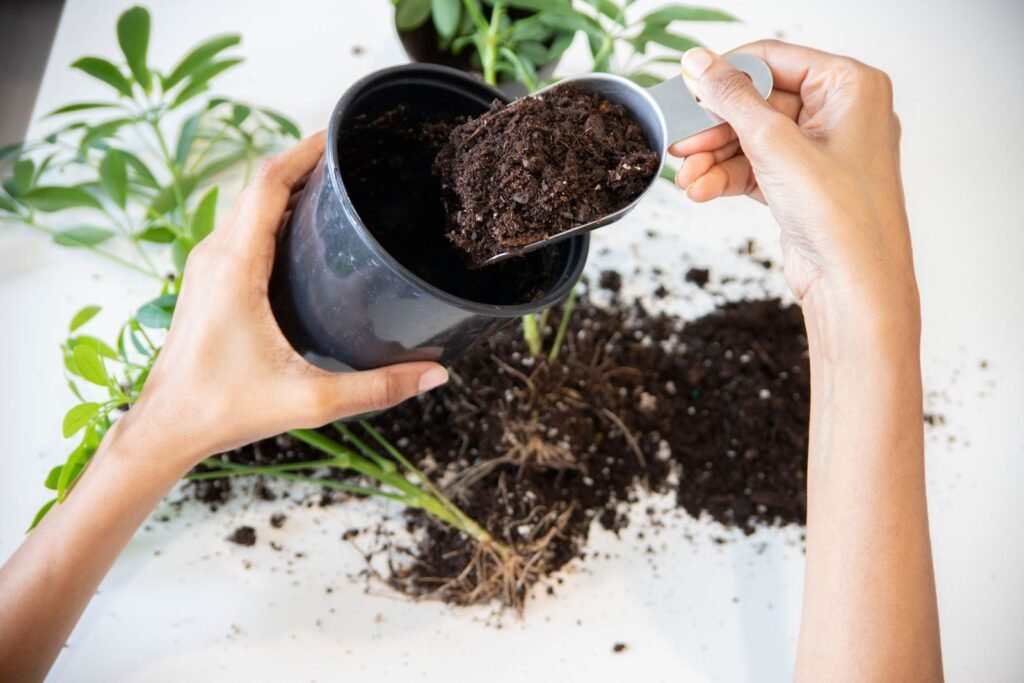
The easiest method. Sprinkle castings on the soil surface and gently scratch them into the top centimetre. Water as usual, and nutrients wash down to the roots over the following weeks.
How much: – Small pots (10–15 cm / 4–6 in): 1–2 tablespoons – Medium pots (15–25 cm / 6–10 in): ¼–½ cup – Large pots (25 cm+ / 10 in+): a 1–2 cm layer
How often: every two to three months in spring and summer; once in winter, or not at all.
 Related guideHow to Use Worm Castings in the Garden and on Houseplants
Method 2: In potting mix
When repotting, mix castings into the new potting mix.
- General houseplants: 10–20% castings by volume (one part castings to four to nine parts potting mix).
- Succulents and cacti: 5–10%, in a gritty, fast-draining mix.
- Seedlings and cuttings: see worm castings for seed starting.
Our worm castings potting mix guide has full recipes.
Method 3: Worm tea
Brew castings in water to make a liquid that’s easy to apply.
- Add a cup of castings to a few litres of dechlorinated water.
- Stir or aerate for 12–24 hours.
- Strain and dilute until it looks like weak tea.
- Water plants with it every two to four weeks in the growing season.
See how to make worm tea for details.
Which houseplants benefit most?
- Fast growers: pothos, monstera, philodendron, spider plants
- Flowering plants: African violets, peace lilies, orchids (in small amounts in bark mixes)
- Herbs on a windowsill: basil, mint, parsley
- Ferns and calatheas, which like rich, moisture-retentive soil
Succulents and cacti benefit too, but in smaller amounts, since they prefer lean soil.
Signs your houseplants are benefiting
After a few weeks of using castings, look for:
- New leaves that are larger and a richer green
- Faster growth during spring and summer
- Potting mix that holds water more evenly instead of drying out in patches
- Healthier roots when you next repot, with more fine, white root hairs
Castings work gradually. Don’t expect overnight changes, and don’t add more just because you can’t see a difference after a week.
Using worm castings for houseplants in semi-hydro or bark mixes
Plants grown in bark (like many orchids) or in inorganic media such as LECA have little organic matter for castings to work with. For bark mixes, a teaspoon or two of castings sprinkled in at repotting is enough. For semi-hydro setups, use a very dilute, well-strained worm tea occasionally rather than solid castings, which can clog the reservoir.
Mistakes to avoid
- Using unfinished castings with food scraps, which can attract fungus gnats indoors. Screen and cure first. See how to store worm castings.
- Using very wet castings, which can keep soil too moist.
- Using castings as the only potting medium. Pure castings are dense and can stay waterlogged in pots.
- Overdoing it in winter, when plants grow slowly. See too much worm castings.
Fungus gnats and castings
Indoor plants are prone to fungus gnats, and moist organic top-dressings can encourage them. Use cured, screened castings, scratch them into the soil rather than leaving a thick layer, and let the top of the soil dry between waterings. See fungus gnats in a worm bin for tactics that also work in pots.
Worm castings for houseplants vs liquid fertilizer
Castings feed slowly and improve soil; liquid fertilizers give a fast, targeted boost. Many indoor growers use castings as a base and an occasional liquid feed for heavy feeders. See worm castings vs fertilizer.
Further reading: Oregon State University Extension’s Composting with Worms (EM 9034) describes using castings in potting mixes, and the UConn Soil Nutrient Analysis Laboratory’s Vermicomposting fact sheet explains worm castings for houseplants and containers.
Frequently asked questions
Can worm castings burn houseplants?
It’s very unlikely. Castings are gentle, but too much can keep soil too wet.
How often should I add castings to houseplants?
Every two to three months during the growing season.
Can I use castings on succulents?
Yes, in small amounts mixed into gritty soil.
Do castings attract bugs indoors?
Cured, screened castings rarely do. Unfinished castings with food scraps can attract fungus gnats.