
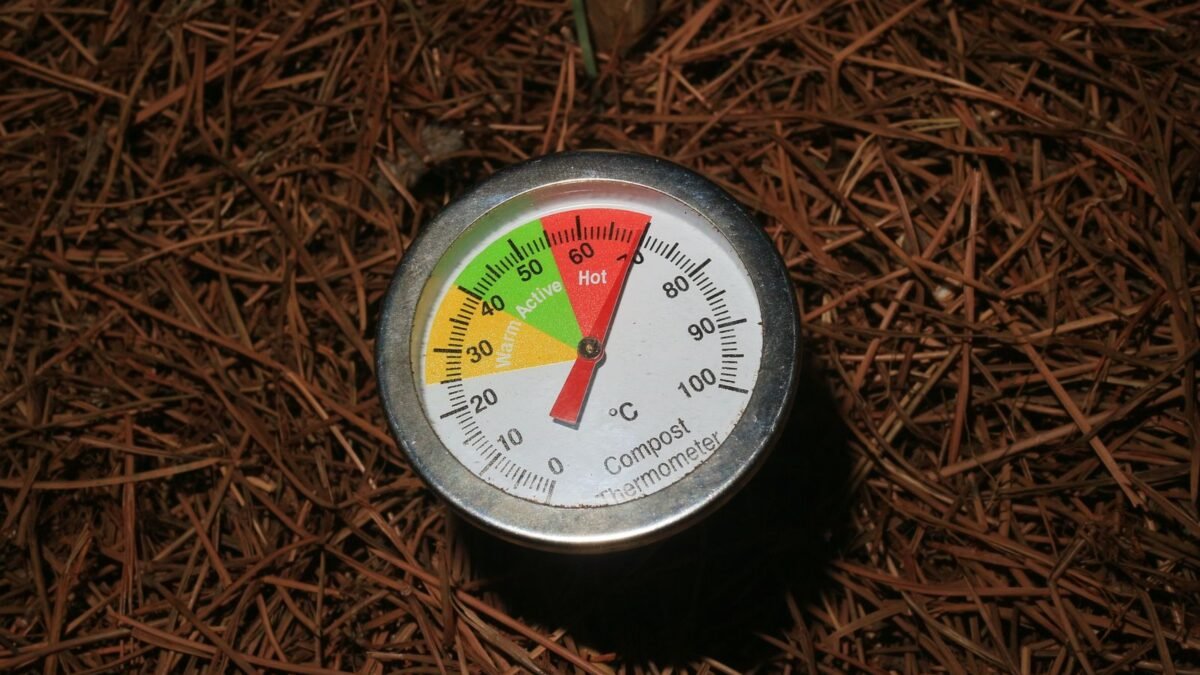
Worm bin temperature controls almost everything: how much worms eat, how fast they breed, how quickly food breaks down and whether they survive at all. Most bin problems in summer and winter come back to temperature, so it’s worth knowing the numbers.
The figures here are for red wigglers (Eisenia fetida), the most common composting worm. Other species have different ranges, covered in our red wiggler vs nightcrawler guide.

The temperature zones
Below 32 °F (0 °C): danger
Bedding freezes. Adult worms die, although cocoons can sometimes survive and hatch in spring.
32–50 °F (0–10 °C): survival mode
Worms become sluggish, stop breeding and eat very little. They can survive here for weeks or months, but your bin will barely process food.
50–59 °F (10–15 °C): slow
Worms are active but eat and breed below their potential.
59–77 °F (15–25 °C): ideal
Peak eating, breeding and castings production. This is the range to aim for.
77–86 °F (25–30 °C): warm
Still fine for most bins, but watch moisture and avoid heavy feeding, because food decomposes quickly and can heat the bin further.
Above 86 °F (30 °C): stress
Worms try to escape, stop eating and may die, especially if the bin is also too wet or poorly ventilated. Above about 95 °F (35 °C), deaths become likely.
Why the bin can be warmer than the room
Decomposition generates heat. A small home bin fed normally stays close to room temperature, but large or concentrated feedings can create hot spots several degrees warmer. Grass clippings, large amounts of coffee grounds and blended food are the usual culprits.
Sun on a plastic bin is the bigger danger. A dark bin in direct summer sun can reach 104 °F (40 °C) or more inside within hours, even if the air is cooler.
 Related guideGetting Worm Bin Moisture Right With the Squeeze Test
How to measure worm bin temperature
Use a probe thermometer
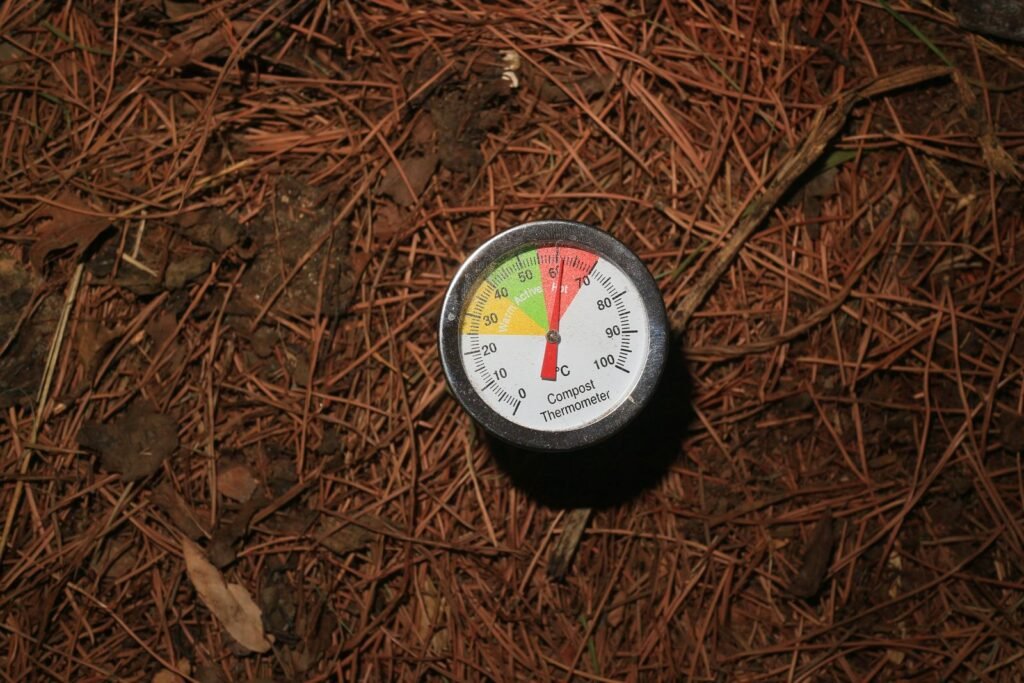
A compost or kitchen probe thermometer pushed 3–4 inches (8–10 cm) into the middle of the bin gives the reading that matters. Air temperature next to the bin can be misleading.
Check more than one spot
Measure near the most recent feeding and in an older area. A big difference points to a hot spot from decomposing food.
When to check
- Daily during heatwaves and cold snaps
- Weekly the rest of the time
- After any large feeding
Our temperature safety checker tells you what your reading means and what to do about it.
Keeping your bin in the ideal range
Choose the right location
Indoors is easiest. Kitchens, laundries and basements often stay in the ideal range year-round. Outdoors, choose full shade and somewhere protected from wind and frost.
Move with the seasons
A bin on a balcony in spring may need to come inside in midsummer and midwinter. Plastic totes and stacking systems are light enough to move.
Adjust feeding
Feed less when it’s cold and less when it’s very hot. Worms can’t process food at the extremes, and uneaten food causes other problems. Our feeding guide has seasonal adjustments.
Warming a cold bin
- Move it indoors or into a garage that stays above freezing.
- Insulate it with an old blanket, straw bales or a box lined with foam board, leaving air holes clear.
- Bury slightly more food in the center. Decomposition adds a little warmth, but don’t overdo it.
- Add a thick layer of dry bedding on top as insulation.
- Use a seedling heat mat under the bin on a low setting, with a thermometer to avoid overheating.
Our cold weather care guide covers autumn preparation in more detail.
Cooling a hot bin
- Move it into shade or indoors immediately.
- Put a frozen water bottle on the bedding surface, replacing it daily.
- Keep bedding slightly moist. Evaporation cools the bin.
- Open extra air holes or prop the lid for ventilation.
- Feed small amounts of cool, watery food like melon or cucumber.
- Avoid materials that heat up as they decompose.
For hot climates, our guide to keeping worms alive in summer heat has many more strategies.
What worms do when temperature is wrong
| Behavior | Possible temperature cause |
|---|---|
| Worms balled up tightly | Cold, or trying to conserve moisture |
| Worms deep at the bottom | Surface too hot or dry |
| Worms on walls and lid | Too hot, or other stress like wetness |
| Worms motionless and pale | Overheating or very cold |
| Population declining | Repeated stress from heat or cold |
Other causes can produce the same behavior. If temperature is fine, check moisture and acidity using our guide to why worms leave the bin.
A seasonal checklist
Spring: feeding picks up as temperatures rise. Increase portions gradually. Move outdoor bins out of winter storage once nights stay above about 50 °F (10 °C).
Summer: shade, ventilation and lighter feeding. Check temperatures daily in heatwaves. Keep frozen bottles ready.
Autumn: collect fallen leaves for bedding. Plan where the bin will spend winter. See cold weather care.
Winter: indoors or insulated. Feed less. Don’t worry if activity slows: worms are waiting for warmth.
Further reading: Oregon State University Extension’s Composting with Worms (EM 9034) covers worm bin temperature and winter care, and NC State Extension’s Worms Can Recycle Your Garbage explains where to place a bin.
Frequently asked questions
What is the best temperature for red wigglers?
Between 59 and 77 °F (15–25 °C). Most sources put the sweet spot around 68–77 °F (20–25 °C).
Can worms survive winter outside?
In mild climates with a large, insulated bin, often yes. In places where bins freeze solid, most adult worms die, though cocoons may hatch in spring. It’s safer to bring small bins indoors.
How hot is too hot for a worm bin?
Sustained temperatures above about 86 °F (30 °C) stress red wigglers, and above 95 °F (35 °C) many will die. Act quickly when readings climb past 82 °F (28 °C).
Does a worm bin heat up like a compost pile?
Not usually. Hot compost piles reach 130–150 °F (55–65 °C) because they’re large and packed with fresh material. Worm bins are small and fed gradually, so they stay close to room temperature unless overfed or left in the sun.

