

Finding worms escaping onto the lid, the walls or, worst of all, the floor is alarming. But worms don’t leave a good home. They wander when something in the bin is uncomfortable, and they’re usually telling you exactly what’s wrong.
First: is this a new bin?
If you’ve added worms in the last week or two, some wandering is normal. Shipping is stressful, the new bedding smells different and the microbes they’re used to haven’t established yet.
The fix: leave a light on over the bin for the first two or three nights. Worms avoid light and will stay down in the bedding. Most settle within a week. Our first-week walkthrough explains what’s normal.
If the bin is established and worms suddenly start leaving, work through the checks below.
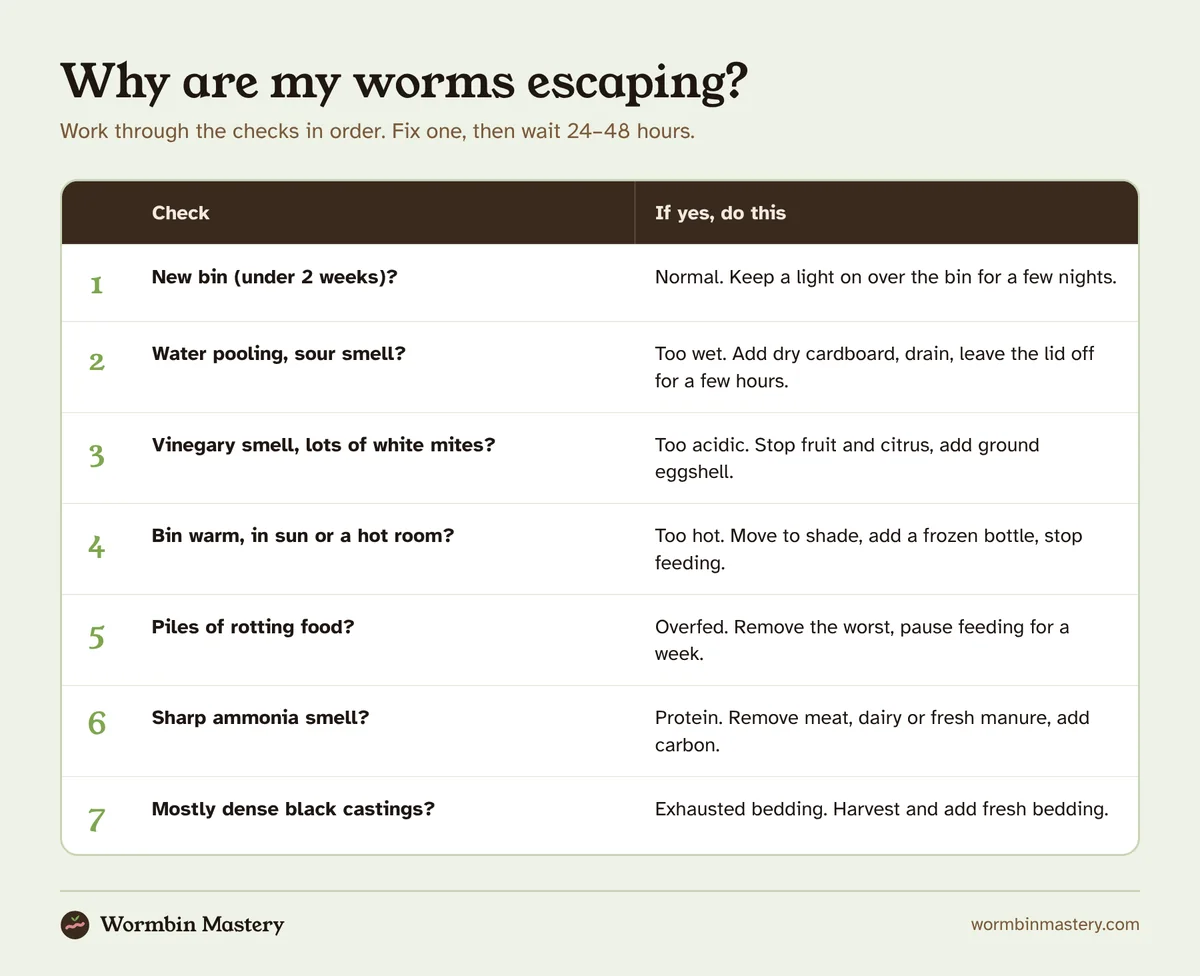
1. Too wet
This is the most common cause. Waterlogged bedding fills the air spaces, and worms climb up to find oxygen. You’ll often see worms on the walls just above the bedding line, water pooled at the bottom and a sour smell.
The fix: mix in several handfuls of dry shredded cardboard, leave the lid off for a few hours under a light, and stop adding watery food. Our guide to fixing a wet worm bin covers this step by step.

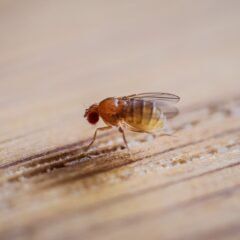 Related guideHow to Get Rid of Fruit Flies in a Worm Bin
2. Too acidic
Lots of citrus, fruit, coffee grounds or overfeeding can drop the pH. Worms dislike acidic conditions and leave. A sour, vinegary smell and an explosion of white mites are common companions.
The fix: stop feeding acidic foods, add a sprinkle of finely ground eggshell or garden lime, and mix in fresh bedding. See our guide to using eggshells as a buffer.
3. Too hot
Worms flee heat. If the bin is in sun or the room is hot, bedding temperatures above about 86 °F (30 °C) drive them to the edges and up the walls.
The fix: move the bin into shade or indoors, add a frozen water bottle and feed less. Our summer heat guide has a full plan.
4. Overfeeding and rotting food
When food rots faster than worms can eat it, it produces heat, acids and gases. Worms move away from it, and sometimes out of the bin entirely.
The fix: remove the worst of the rotting food, stop feeding for a week or two, and add dry bedding. Then rebuild slowly using our feeding schedule.
5. Protein or ammonia
Meat, dairy, large amounts of pet food or fresh manure release ammonia as they break down. It’s toxic to worms, and they’ll try hard to escape it.
The fix: remove the source immediately, add plenty of fresh bedding and leave the lid off for air. Check our list of foods to keep out.
6. Lack of oxygen
Compacted bedding, a sealed lid, blocked air holes or too much blended food can starve the bin of oxygen.
The fix: gently fluff the bedding with a hand fork, clear the air holes and add bulky material like shredded cardboard.
7. Bedding has turned to castings
An old bin that’s mostly castings offers little food and little air. Worms may wander looking for something better.
The fix: harvest some castings and add fresh bedding. See how to harvest worm castings.
8. Weather and pressure changes
Many worm keepers notice worms wandering before storms and during rain, especially in outdoor bins. It’s thought to relate to changes in air pressure and humidity. In the wild, rainy weather is when earthworms travel across the surface.
The fix: if the bin is otherwise healthy, keep a light on overnight during stormy weather. The behavior passes.
Stopping worms escaping while you fix the cause
- Light on overnight. The most effective short-term trick.
- Damp cloth over the surface. Worms often stay under a moist cover.
- Fine mesh over air holes. Stops escapees without reducing airflow.
- Check the lid fits. Gaps around the rim are easy exits.
Don’t just trap worms in. If conditions are bad, they need you to fix the cause.
Rescuing escaped worms
If you find worms on the floor:
- Pick them up gently, ideally with damp hands or a soft spoon.
- If they’re dry and stiff, they’re probably dead. If they’re still moving, put them on top of the bedding.
- Mist them lightly and close the lid.
Worms that have been out for a few hours often recover if they haven’t dried out.
When it’s more than wandering
If you see dead worms as well as escapees, the problem is more serious. Our guide to why worms die covers the causes, and the worm bin health checker can help narrow it down.
A quick decision guide
| What you see | Most likely cause | First fix |
|---|---|---|
| Worms on walls, water at the bottom | Too wet | Add dry cardboard, drain, air out |
| Sour, vinegar smell and white mites | Too acidic | Stop fruit, add ground eggshell |
| Bin feels warm, in a hot spot | Heat | Move to shade, frozen bottle |
| Rotting food piles, foul smell | Overfeeding | Remove food, pause feeding |
| Sharp ammonia smell | Protein or fresh manure | Remove source, add carbon |
| Dense black castings, little bedding | Exhausted bedding | Harvest and add fresh bedding |
| Brand-new bin, otherwise fine | Settling in | Light on for a few nights |
Fix the first likely cause and wait 24–48 hours. If worms are still leaving, move to the next one.
Further reading: Oregon State University Extension’s Composting with Worms (EM 9034) has a troubleshooting table that covers worms escaping, as does NC State Extension’s Worms Can Recycle Your Garbage.
Frequently asked questions
Is it normal for a few worms to be on the lid?
A few worms on the underside of the lid, especially in humid bins, is normal and nothing to worry about. Dozens or hundreds is a sign to investigate.
Why do my worms only escape at night?
Worms avoid light, so they move around the surface in darkness. That’s why a light overhead stops most escapes.
Can worms escape through drainage holes?
They can, but usually only when conditions are poor. Small holes (about ¼ inch or 6 mm) and a catch tray underneath keep the few that wander from going far.
Should I add more worms to replace escapees?
Fix the cause first. Adding worms to a bin they’re trying to leave will just give you more escapees.