

Keeping a worm bin in winter is mostly about one thing: keeping the bedding above freezing. Red wigglers slow down when temperatures fall below about 15 °C (59 °F), nearly stop eating below 10 °C (50 °F), and die if the bin freezes solid. With a little preparation, though, worms come through winter fine, and indoor bins keep working at full speed.
This guide covers safe temperatures, how to winterize indoor and outdoor bins, how to feed in cold weather and how to spot cold stress.
Quick answer
- Best option: move the bin indoors to a basement, utility room or heated garage.
- Outdoor bins: insulate with straw, blankets or foam, and add extra bedding.
- Feed less as temperatures drop. Worms eat little below 10 °C.
- Freezing kills adult worms. Some cocoons survive and hatch in spring.
How cold affects worms
- 15–25 °C (59–77 °F): ideal; full activity.
- 10–15 °C (50–59 °F): slower eating and breeding.
- 5–10 °C (41–50 °F): survival mode. Very little eating, no breeding.
- 0–5 °C (32–41 °F): worms cluster and become sluggish.
- Below 0 °C (32 °F): bedding freezes; adult worms die.
Cocoons are hardier than adults and often survive light freezes, which is why some outdoor bins “come back” in spring. Our worm bin temperature range guide explains each zone in detail, and the temperature safety checker gives a quick answer for your conditions.

Option 1: Bring the bin indoors
The simplest way to protect a worm bin in winter is to move it inside. Good spots:
- A basement (often 10–18 °C)
- A utility room or laundry room
- A pantry or closet
- An insulated, heated garage
Move the bin on a mild day, leave a light on for a night or two, and feed lightly for the first week. See the best place for a worm bin for more indoor options.
 Related guideGetting Worm Bin Moisture Right With the Squeeze Test
Option 2: Insulate an outdoor bin
If you can’t move it, insulate it.
- Move it to a sheltered spot, against a south-facing wall (north-facing in the southern hemisphere), out of wind.
- Add extra bedding. Increase the bedding depth to 30 cm (12 in) or more. More mass holds heat.
- Wrap the bin. Use straw bales, old blankets, bubble wrap or rigid foam boards around the sides and on the lid.
- Raise it off frozen ground on wood or foam.
- Cover the surface inside with a thick layer of dry leaves or a folded burlap sack.
Large wooden bins and in-ground systems hold heat better than small plastic totes. A wooden worm bin is a good winter choice.
Option 3: Add gentle heat
In very cold regions, some worm keepers add heat:
- Bury a heat source in the middle: a pile of fresh (but not hot) grass clippings or a little manure can generate gentle composting heat. Leave space so worms can move away if it gets too warm.
- Seedling heat mats under a tote, on low, can keep a garage bin above freezing. Use a thermostat and never let the bedding get above 25 °C (77 °F).
- A larger mass of food and bedding generates its own slight warmth.
Avoid electric heaters directly against plastic bins, and anything that could dry the bedding out.
Feeding a worm bin in winter
Worms eat much less when cold. Overfeeding in winter is a common mistake, because food sits uneaten, rots and can freeze into a soggy lump.
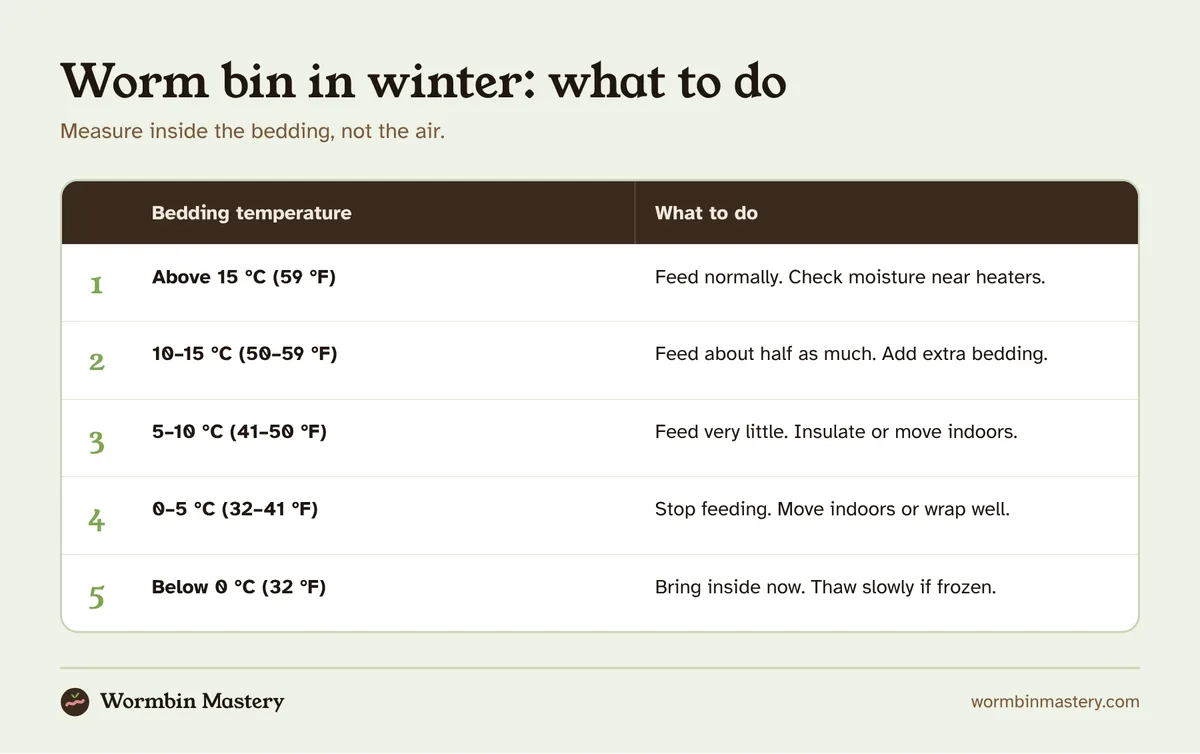
- Indoors at normal room temperature: feed as usual.
- 10–15 °C: feed about half as much.
- Below 10 °C: feed very little, and only when the last meal is gone.
- Below 5 °C: stop feeding until it warms up.
Pre-frozen and thawed, chopped food is easiest for cold worms to eat. Read how often to feed worms for a general guide.
Moisture in winter
Indoor bins near heating can dry out. Check moisture weekly with a squeeze test. Outdoor bins tend to get wetter in winter rain and snowmelt. Keep lids on, add dry cardboard and make sure drainage holes aren’t blocked by ice.
Signs of cold stress
- Worms clustered tightly in the center or bottom of the bin
- Food sitting untouched for weeks
- Worms that move slowly when disturbed
- Few or no worms near the surface
These are normal in a cold outdoor bin. If you see them indoors, the bin is probably in a cold spot. Move it somewhere warmer.
If your bin freezes
Don’t give up. Let it thaw slowly in a cool place, not next to a heater. Check for movement after a day or two. Many adult worms may have died, but cocoons often survive. Keep the bin moist, feed lightly and give it a few weeks. Baby worms frequently appear by spring. If the bin starts to smell as dead worms decompose, add dry carbon. See why worms die for more.
Getting ready for spring
As temperatures rise, increase feeding gradually. Spring is a good time to harvest castings, refresh bedding and, if your colony is large, split the worm bin.
Further reading: Oregon State University Extension’s Composting with Worms (EM 9034) covers caring for a worm bin in winter, and the UConn Soil Nutrient Analysis Laboratory’s Vermicomposting fact sheet explains temperature limits.
Frequently asked questions
Can red wigglers survive winter outside?
In mild climates with insulation, often yes. In regions where bins freeze solid for weeks, adults usually die, though cocoons may survive.
What’s the lowest temperature for a worm bin?
Keep the bedding above about 5 °C (41 °F) for worms to stay healthy. Above 10 °C they’ll keep eating slowly.
Should I feed my worms in winter?
Yes, but less. Match feeding to how fast food disappears.
Can I keep a worm bin in an unheated garage in winter?
Only if the garage stays above freezing. Insulate the bin and check temperatures on the coldest nights.

