
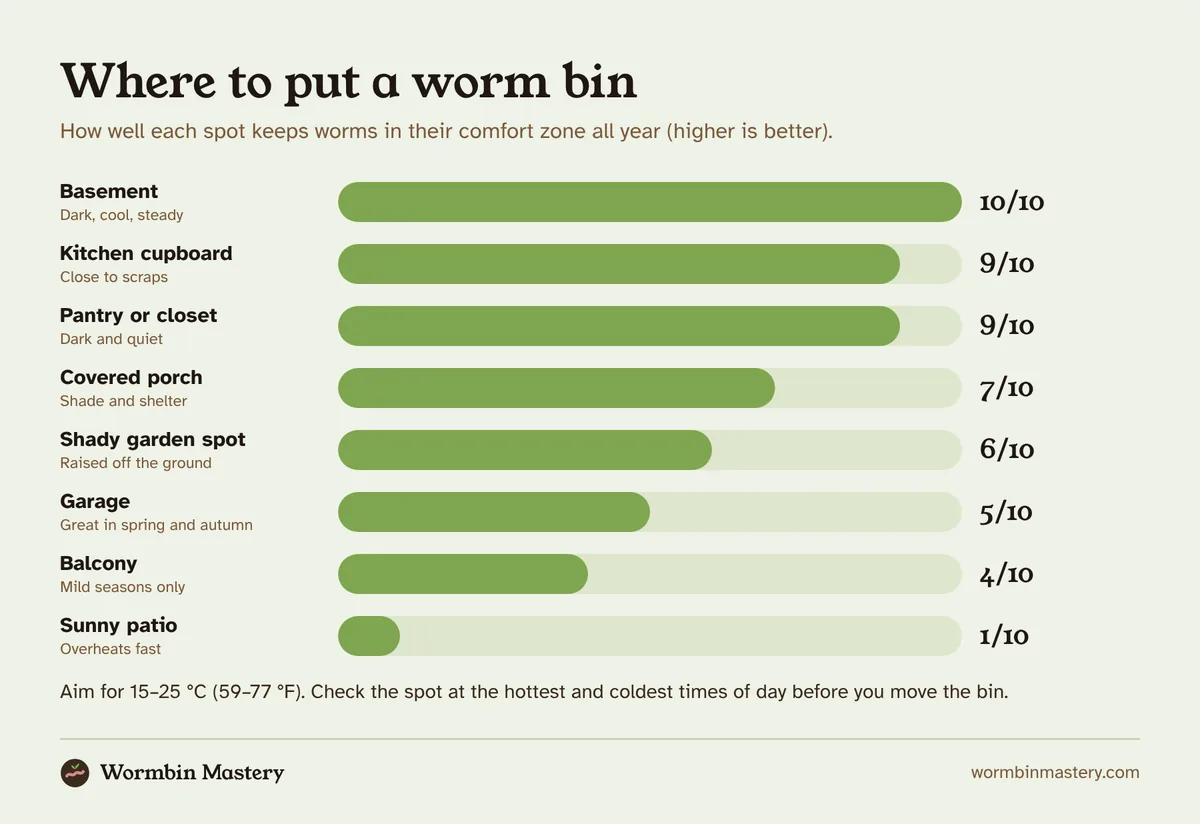
The best place for a worm bin is somewhere that stays between about 15 and 25 °C (59–77 °F), out of direct sun, and close enough to the kitchen that you’ll actually feed it. Get the location right and most other problems become rare. Get it wrong and you’ll spend the year fighting heat, cold or neglect.
This guide walks through what worms need from a location, the best indoor and outdoor spots, and the places to avoid.
Quick answer
- Indoors: under the kitchen sink, a pantry, a closet or a basement.
- Outdoors: full shade, sheltered from wind and rain, raised off hot paving.
- Avoid: direct sun, heaters, freezing garages, vibrating appliances and places you’ll forget.
What makes the best place for a worm bin?
Five things decide whether a spot is the best place for a worm bin or a poor one.
1. Steady temperature
Red wigglers do best between 15 and 25 °C. They survive brief swings outside that range, but a location that bakes in the afternoon or freezes overnight stresses them. A stable, slightly cool spot beats a warm one with big daily swings. Check your spot with the temperature safety checker.
2. Shade and darkness
Sunlight heats plastic bins fast. A bin in full summer sun can pass 40 °C (104 °F) in a couple of hours, which kills worms. Darkness also keeps worms near the surface, where they eat.
3. Shelter from rain
Outdoor bins left in heavy rain flood. Worms drown or flee. A roof overhang, a lid with a small lip, or a tarp keeps the bedding at the right moisture.
4. Low vibration
Worms sense vibration through their bodies. Constant shaking from a washing machine, dryer or busy door can make them restless and more likely to wander.
5. Convenience
The best place for a worm bin is also one you walk past. Bins tucked away at the bottom of the garden tend to be forgotten, then overfed in a guilty rush.
The best indoor spots
Indoor locations win in most climates because temperatures stay steady all year.
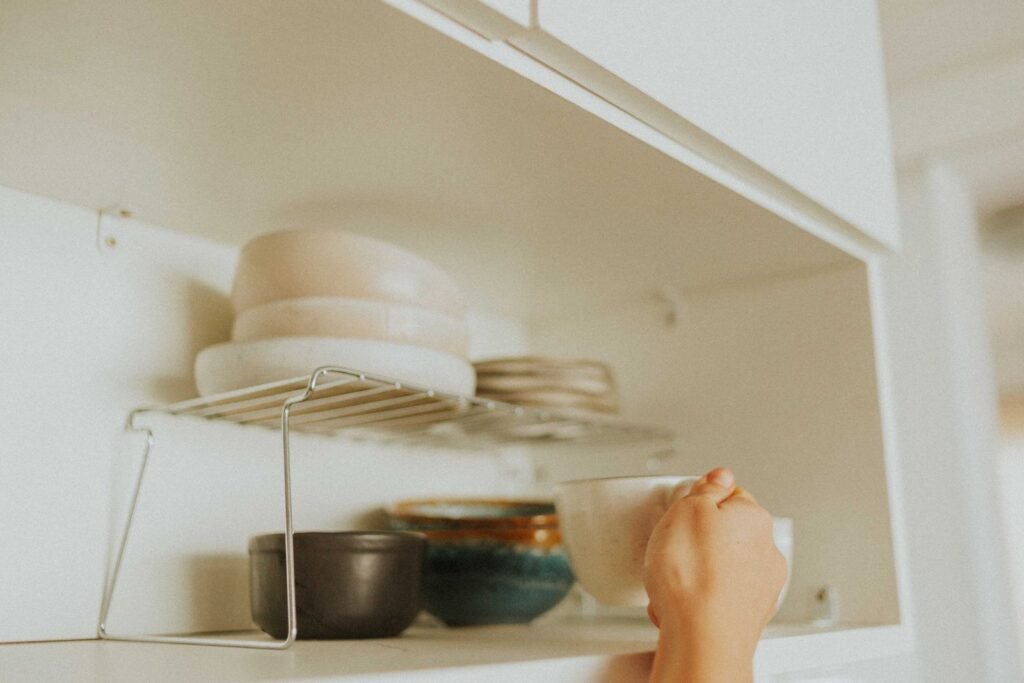
- Under the kitchen sink. Close to where scraps are made. Check for hot pipes and leave the door ajar now and then for air.
- A pantry or utility cupboard. Dark and cool. Ideal for a small tote.
- A closet floor. Good if it isn’t next to a heated wall.
- A basement. Often the most stable spot in the house, usually 12–20 °C.
- A laundry room. Fine if the bin isn’t on top of or right next to the machine.
If you’re short on space, our guide to worm composting in an apartment covers small-space setups.
 Related guideWorm Composting in an Apartment: A Small-Space Guide That Doesn’t Smell
The best outdoor spots
Outdoor bins work well in mild climates or for part of the year.
- The north or east side of a building (south or east in the southern hemisphere), where afternoon sun can’t reach.
- Under a deciduous tree. Shade in summer, more sun in winter.
- A covered porch or carport. Sheltered from rain and direct sun.
- Beside a vegetable garden. Short trip to use castings and to bring in leaves.
Raise outdoor bins on bricks or a pallet. It keeps them off hot paving in summer and cold, wet ground in winter, and makes drainage easier.
Garages, sheds and balconies
These are “it depends” locations.
- Garages are often perfect in spring and autumn but can freeze in winter and overheat in summer. Read our worm bin in a garage guide before committing.
- Sheds heat up quickly in summer, especially metal ones. Ventilation is essential.
- Balconies suit mild seasons. Move the bin inside for heatwaves and frosts.
Places to avoid
- Direct sun, even for part of the day. The most common cause of sudden worm deaths.
- Beside radiators, ovens or heat vents.
- An unheated garage in a cold winter. Bins can freeze solid below about -5 °C.
- On top of a washing machine or dryer. Vibration and heat.
- Low spots outdoors where rainwater pools.
Moving with the seasons
There’s no rule that says a worm bin must stay put. Many people keep the bin outdoors in spring and autumn, in a garage in summer, and indoors in winter. A tote with handles makes this easy. Move it on a mild day and leave the worms alone for a day or two afterward. For cold-weather tips, see our worm bin in winter guide, and for heat, keeping a worm bin cool.
How to test a new location
Before you commit, put a cheap thermometer where the bin will go and check it at the coldest and hottest times of day for a few days. If it stays within 10–28 °C, the spot is fine. If it swings wildly, choose somewhere else. Once the bin is in place, push a thermometer into the middle of the bedding now and then, since the bin can be a few degrees warmer than the air. Our temperature range guide explains why.
Matching the location to your climate
The best place for a worm bin depends heavily on where you live.
- Hot climates. Indoors or in a deeply shaded, ventilated spot is almost essential for most of the year. A tiled floor in an air-conditioned room is ideal. Outdoor bins need afternoon shade, a light-colored lid and extra air holes.
- Cold climates. Plan for an indoor home from late autumn to spring. A basement or heated utility room keeps worms eating all winter. Outdoor bins need insulation or a move.
- Mild, temperate climates. You have the most freedom. A shaded spot outdoors can work all year with a little insulation in cold snaps.
- Humid climates. Choose a spot with good airflow so bedding doesn’t stay soggy, and check moisture more often.
A quick location checklist
Before you settle on a spot, run through these questions:
- Does it stay out of direct sun at every time of day, in every season?
- Will it stay above freezing in winter and below about 30 °C (86 °F) in summer?
- Is it sheltered from rain and standing water?
- Is it away from heaters, ovens and vibrating machines?
- Can you reach it easily with a container of scraps?
- Is there room to lift the lid and dig a little?
If you can answer yes to all six, you’ve found the best place for a worm bin in your home.
Further reading: Oregon State University Extension’s Composting with Worms (EM 9034) discusses bin placement for different seasons, and NC State Extension’s Worms Can Recycle Your Garbage covers indoor and outdoor bin locations.
Frequently asked questions
Can I keep a worm bin in my kitchen?
Yes. A well-run bin doesn’t smell, so a kitchen cupboard is one of the best spots. Keep it away from the oven and dishwasher vents.
Is a basement a good place for worms?
Usually it’s ideal: dark, cool and steady. Just make sure it doesn’t drop near freezing in winter.
Can a worm bin go in direct sun if it’s a light color?
Light colors help a little, but direct sun still overheats a bin quickly. Always choose shade.
Do worms need fresh air?
Yes. They breathe through their skin. Any location works as long as the bin has air holes and isn’t sealed in a closed cupboard for months without any airflow.