
Worm composting in an apartment is one of the easiest ways to cut kitchen waste when you have no garden. A small, well-run worm bin sits quietly in a cupboard or corner, doesn’t smell, and turns a household’s vegetable scraps into rich castings for houseplants and balcony pots.
The key is that indoor worm bins are less forgiving of mistakes than outdoor ones. You’ll notice a wet, overfed bin much sooner when it sits next to your sofa. This guide covers how to set one up so it stays clean and quiet.
Quick answer
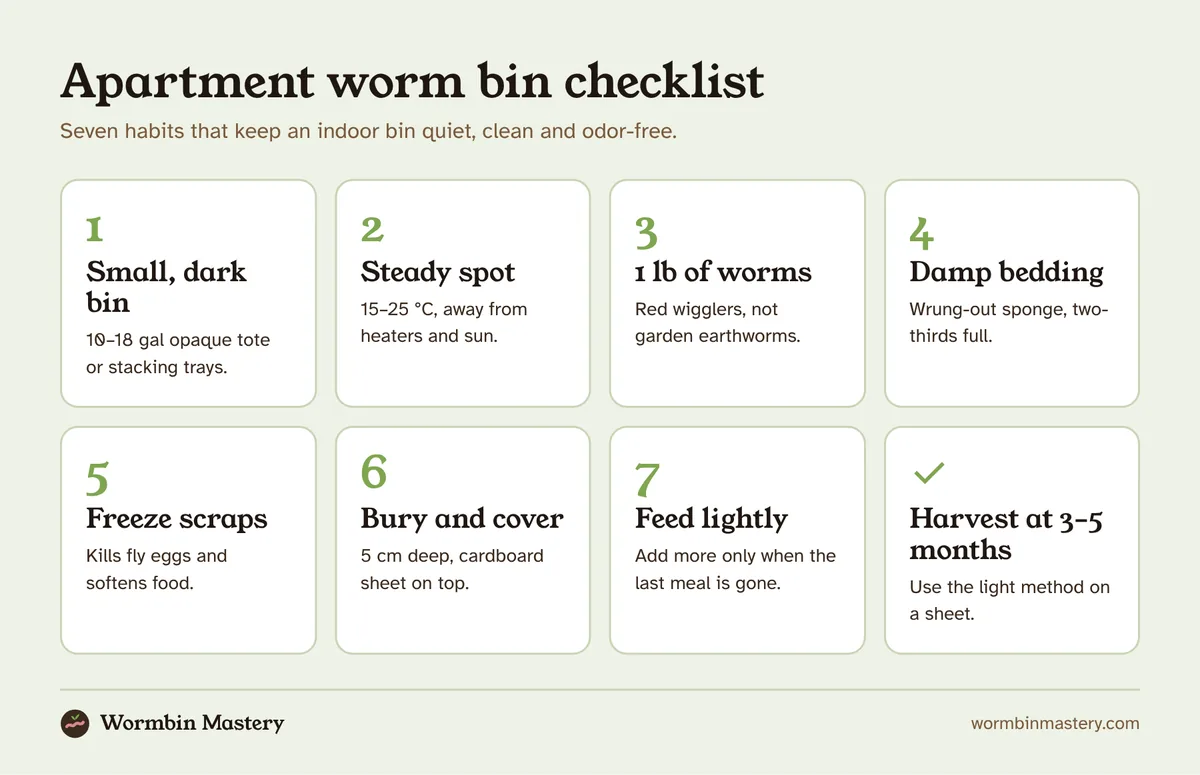
- A 10–18 gallon (40–70 L) plastic tote or a stacking tray bin suits most apartments.
- Start with about 1 lb (450 g) of red wigglers.
- Keep it somewhere dark, between 15 and 25 °C (59–77 °F), away from heaters.
- Freeze scraps first and always bury them under bedding.
- Feed less than you think. Overfeeding causes almost every apartment problem.
Why worm composting in an apartment works so well
Indoor conditions suit composting worms. Red wigglers like steady, mild temperatures, and most homes sit right in their comfort zone all year. That means an apartment worm bin often outperforms an outdoor bin that freezes in winter and cooks in summer.
Worms also process food without heat or turning. Unlike a traditional compost heap, a worm bin doesn’t need a big volume of material to work, so it scales down to a box the size of a laundry basket.
A healthy indoor worm bin smells like a forest floor or damp earth. If you open the lid and smell rot, something is off, and it’s usually fixable in a few days.

Choosing a bin for a small space
You have three good options:
- A single plastic tote. Cheap and simple. A 10–14 gallon (40–55 L) opaque tote with air holes fits under a sink or in a closet. Our DIY worm bin guide shows how to drill one.
- A stacking tray system. More expensive, but harvesting is cleaner, which matters when you’re working on a balcony or kitchen floor.
- A small flow-through bin. Castings drop out of the bottom, so you rarely disturb the worms. Good if you want to harvest without moving bedding indoors.
Avoid clear containers. Worms dislike light, and a dark bin keeps them working near the surface.
Size the bin to your scraps, not your ambition. Worm composting in an apartment works best when the bin is slightly too small rather than too big. A one- or two-person household that cooks a few times a week rarely needs more than 1–2 square feet of surface area to start.
 Related guideThe Best Place for a Worm Bin, Indoors and Outdoors
The best spots in an apartment
Good places share three things: darkness, steady temperature and easy access.
- Under the kitchen sink (check it isn’t next to hot pipes)
- A closet or pantry floor
- A shaded corner of a balcony, but only in mild seasons
- A spare cupboard in a hallway or laundry area
Avoid spots near radiators, ovens, sunny windows and fridges that blow warm air from the back. For a full checklist, see the best place for a worm bin.
Setting up your apartment worm bin
- Prepare the bedding. Shred plain cardboard or newspaper and mix it with a little coconut coir. Soak it, then squeeze until it feels like a wrung-out sponge. Our bedding guide covers ratios, or use the bedding calculator.
- Fill the bin about two-thirds full with fluffy, damp bedding. Add a handful of garden soil or old castings to introduce helpful microbes.
- Add the worms to the surface and leave the lid off under a light for an hour. They’ll burrow down.
- Give one small first meal, about a cup of soft scraps, buried in one corner.
- Put a sheet of damp cardboard on top of the bedding. It keeps moisture in and flies out.
Then leave them alone for a week. New bins need time for microbes to start breaking food down.
Feeding without smells or flies
Smells and fruit flies are the two things that end most attempts at worm composting in an apartment. Both come from the same causes: too much food, food left on the surface, and wet bedding.
- Freeze scraps first. Keep a container in the freezer and add scraps all week. Freezing kills fruit fly eggs and softens food so worms eat it faster.
- Bury everything. At least 2 inches (5 cm) under the bedding, every time.
- Add dry carbon with every meal. A handful of shredded cardboard balances wet food.
- Feed small, feed often enough. Start with about a cup a week and only increase when the last meal has mostly disappeared. See how often to feed worms.
- Skip the troublemakers. No meat, dairy, oily food or large amounts of citrus and onion. Here’s the full list.
If you see a few fruit flies anyway, our fruit fly guide clears them in about two weeks.
Dealing with liquid indoors
A well-run indoor worm bin shouldn’t drip much. If liquid collects in the bottom, the bin is too wet. Set the bin on a tray or a second tote lid to catch drips, and add more dry cardboard. Don’t use the liquid on plants unless it smells earthy. Sour liquid is a sign of rot. Read more about worm bin leachate.
Harvesting castings in a small space
Harvesting is the messiest job, so plan it. Lay out a sheet or shower curtain on the floor, or do it on a balcony. The light method works well indoors: tip the contents into small cone-shaped piles under a bright lamp, wait 20 minutes, and scrape the castings off the outside as worms move down. Our harvesting guide explains every method.
Expect your first harvest after about three to five months of worm composting in an apartment.
Using castings when you don’t have a garden
Apartment growers have plenty of uses:
- Top-dress houseplants with a thin layer a few times a year. See worm castings for houseplants.
- Mix 10–20% castings into potting soil for balcony containers and herbs.
- Give extra castings to friends, a community garden or a neighbour with a yard.
Common apartment worm bin mistakes
- Putting it somewhere warm. Above about 30 °C (86 °F), worms stop eating and try to leave.
- Overfeeding in the first month. The bin isn’t ready for big meals yet.
- Too much fruit. Soft, sugary fruit draws flies and mites.
- A sealed, airless bin. Worms need oxygen. Drill holes near the top and in the lid.
- Ignoring early signs. A slight sour smell is easy to fix. A week-old soggy mess is harder.
Further reading: The US EPA’s Composting at Home page covers indoor composting basics, and Oregon State University Extension’s Composting with Worms (EM 9034) has bin plans that suit worm composting in an apartment.
Frequently asked questions
Will an apartment worm bin smell?
Not if it’s run well. It should smell like damp soil. A bad smell means too much food or too much moisture, and adding dry cardboard while pausing feeding usually fixes it within days.
Can worms escape into my apartment?
A few may wander in the first week while they settle in. Keeping a light on over the bin for a few nights solves this. Worms that keep leaving are telling you conditions are wrong, usually too wet or too acidic.
Is it allowed in a rental?
Usually yes, since it’s a sealed container like any storage box. If you’re unsure, check your lease, but most landlords never know it’s there.
How much food can an apartment worm bin handle?
A pound of worms can eventually eat roughly half a pound of scraps a day under good conditions, but start much lower. Most small households produce more scraps than one bin can handle, so compost only the softer vegetable scraps and send the rest to municipal collection.